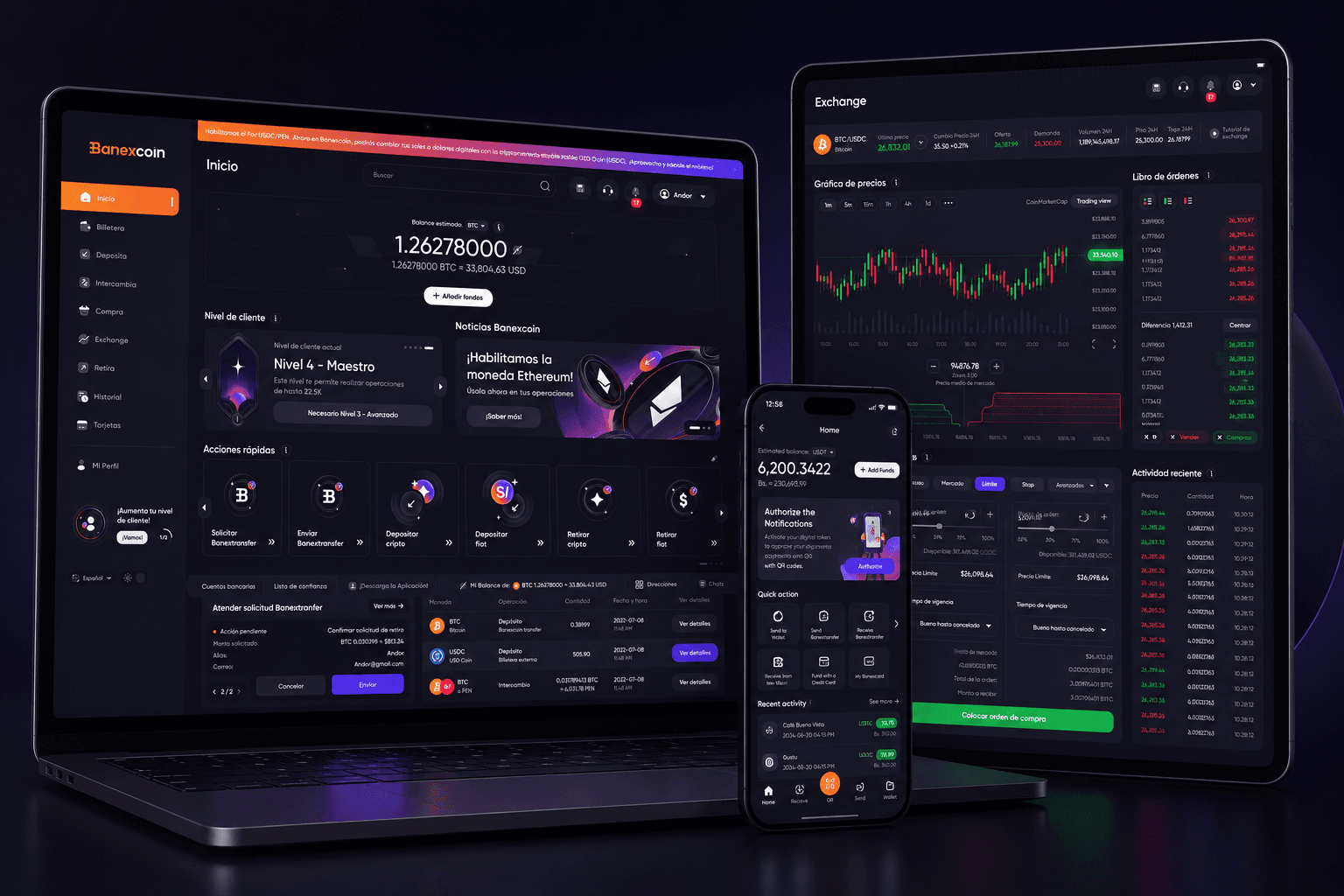
Reimagining Digital Banking for Cross-Border Families
B89 is a modern financial platform built for Latin Americans who regularly move money across borders. Over nearly a year, I designed most of the mobile product, including remittances, card management, onboarding, KYC, recurring transfers, and account experiences, helping transform complex financial operations into intuitive everyday interactions.
B89
Peru → Latin America
Product Design, UX Research, Interaction Design, Design System, Prototyping, Developer Handoff.
At a glance
~9 Months
FinTech / Digital Banking
iOS, Android, Landing Pages
Product Designer. Led the design of most mobile experiences, from onboarding to remittances and card management.
UX Research, Product Design, Interaction Design, Design Systems, Prototyping, Motion Design, Developer Handoff
CEO, Product Lead, Product Designer, 2–3 Developers, QA Engineer, Illustrator
The company & the opportunity
B89 is a digital financial platform built for Latin Americans who need a simpler way to move money across borders. Combining international remittances, digital payments, and a Visa card into a single mobile experience, the product aimed to make financial services more accessible, transparent, and approachable for people managing finances between countries.
When I joined the project, the overall product direction had already been established, but most of the mobile experience was still waiting to be designed. Rather than working on isolated features, I became responsible for designing the majority of the application, translating business requirements into cohesive user journeys that balanced financial complexity with everyday simplicity.
How the role expanded
Instead of focusing on isolated deliverables, my responsibilities gradually evolved from designing individual flows to shaping the overall product experience across the platform.
Product Foundation
Joined the project after the initial visual direction had been established, learning the product vision and aligning with the design language before taking ownership of new experiences.
Core Product Experiences
Designed the primary user journeys including onboarding, authentication, KYC, remittances, account management and profile, establishing the foundation of the everyday banking experience.
Financial Features
Expanded the platform with recurring transfers, card management, transaction history, international payment services and additional financial tools that transformed the product into a more complete ecosystem.
Design System & Consistency
Scaled the visual language across dozens of new screens, maintaining consistency through reusable components, shared interaction patterns and production-ready prototypes.
Product Refinement
Worked closely with developers through implementation, QA, iteration and final product refinements, ensuring the experience remained consistent from design to production.
As the product matured, my role naturally evolved from designing individual interfaces to shaping the overall user experience, ensuring consistency across an increasingly complex financial platform.
Four guiding principles
Every major experience was designed around four principles that made international money movement feel simpler, more transparent and more human.
Make Money Movement Feel Effortless
Cross-border transfers should feel as intuitive as sending a message. Every flow was designed to reduce uncertainty while helping users complete financial tasks with confidence.
Remittances · Transfers · PaymentsBuild Trust Through Transparency
Financial products require confidence. Clear transaction details, predictable fees, account visibility and understandable language helped users feel in control throughout every interaction.
History · Card · Account · SecurityReduce Friction Across Critical Flows
Simplify onboarding, KYC, card activation and recurring transfers by breaking complex processes into smaller, easier decisions without sacrificing compliance.
Onboarding · KYC · Card · Recurring TransfersCreate One Cohesive Financial Experience
Unify remittances, payments, card management and everyday banking into a consistent mobile experience supported by a scalable design system.
Design System · Mobile · ComponentsWhat the product needed to solve
Simplifying Cross-Border Money Movement
Designing financial flows that made international transfers feel understandable, predictable and accessible for everyday users.
Building Trust Around Every Transaction
Helping users feel confident through transparent information, clear confirmations and consistent financial feedback.
Balancing Compliance With Simplicity
Designing onboarding, KYC and card management experiences that respected financial regulations without overwhelming users.
Creating One Cohesive Banking Experience
Bringing remittances, card management, payments and everyday banking into a unified mobile product with a consistent interaction language.
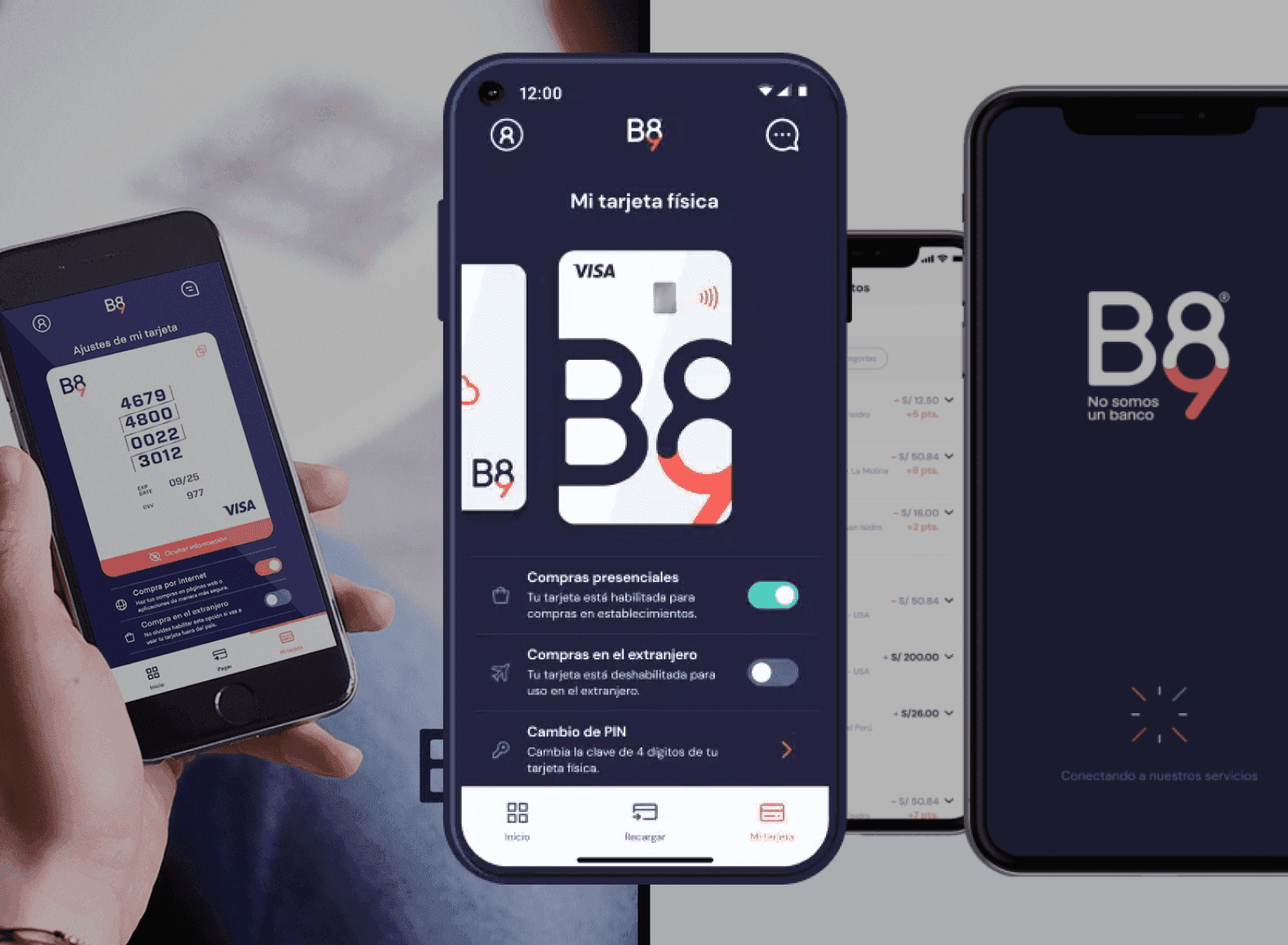
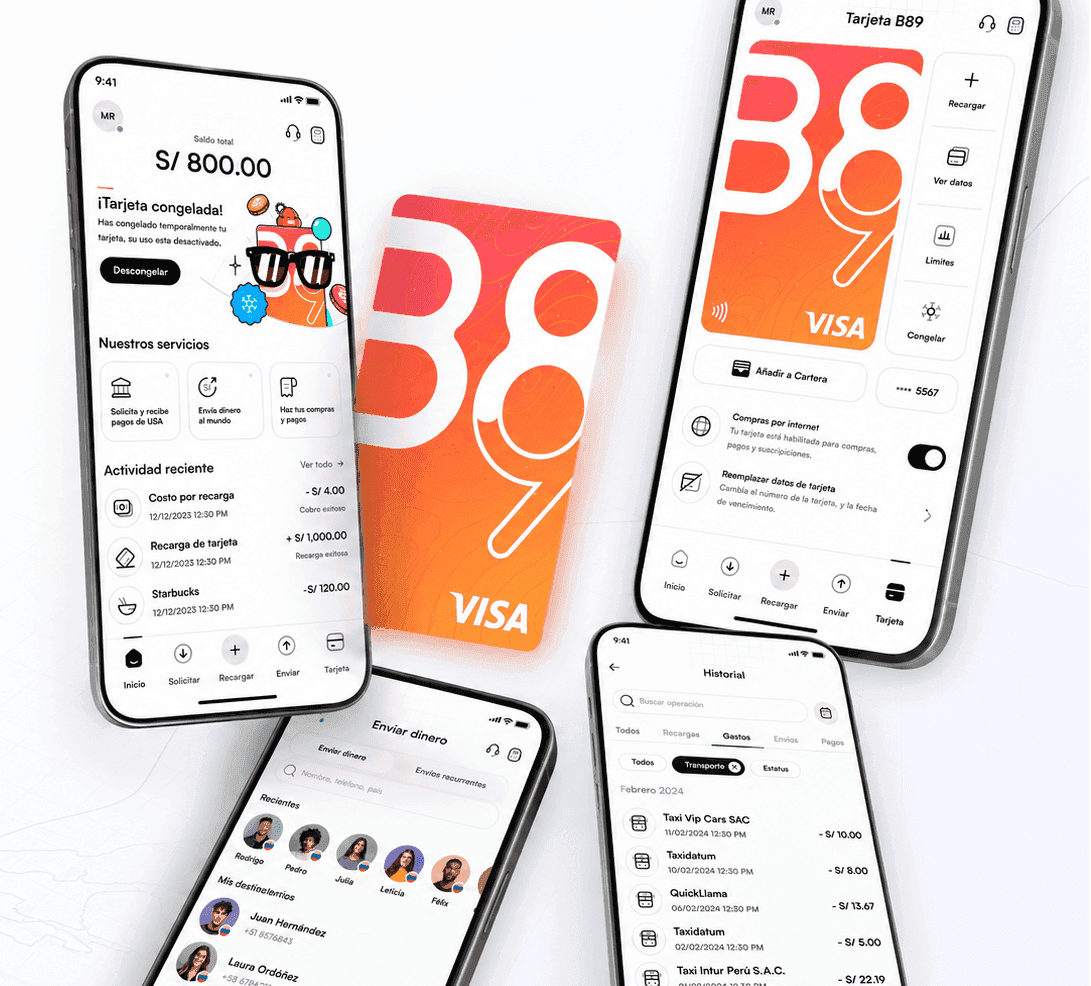
Beyond introducing new features, one of the biggest challenges was redefining the product's visual identity. The experience evolved from a conventional mobile banking interface into a friendlier, more distinctive financial product centered around clarity, personality and everyday usability.
An approachable financial foundation
Rather than designing isolated banking features, the objective was to create a financial experience that felt approachable from the very first interaction. Every decision focused on reducing uncertainty, increasing trust, and making complex financial tasks feel simple enough for everyday users.
Human-Centered Finance
Design financial experiences that prioritize clarity, familiarity and confidence before introducing complexity.
Everyday Money Movement
Focus on the actions users perform most frequently sending money, managing cards, requesting payments and tracking transactions.
Reduce Financial Anxiety
Break complex financial operations into guided, transparent steps that help users understand what happens before, during and after every transaction.
Build for Long-Term Growth
Create a scalable product foundation capable of supporting future services, new markets and an expanding financial ecosystem.
Creating Everyday Banking
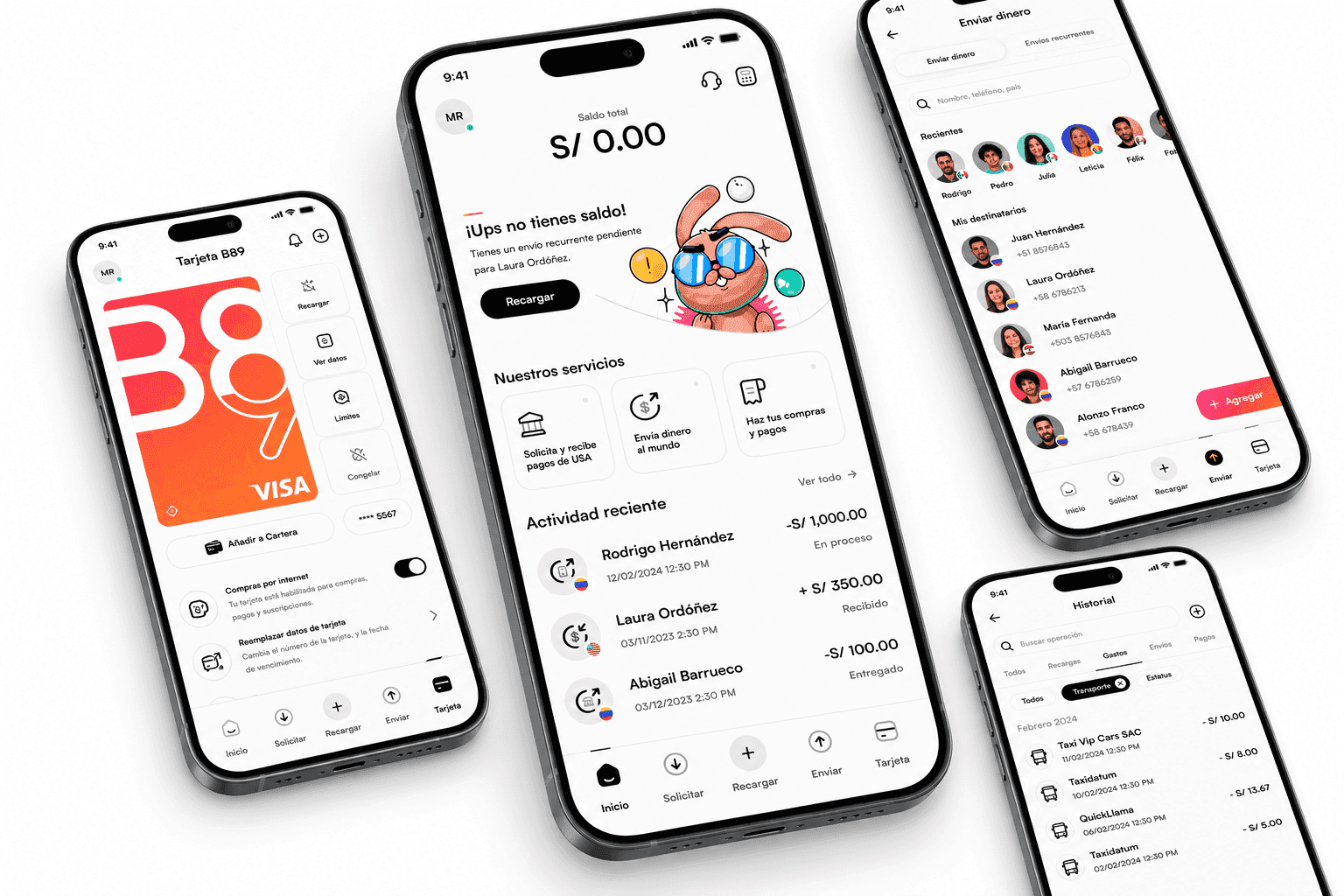
B89 wasn't designed around cryptocurrency trading or investment. Its primary goal was to help people manage everyday financial activities from receiving international payments to sending remittances and managing their B89 card.
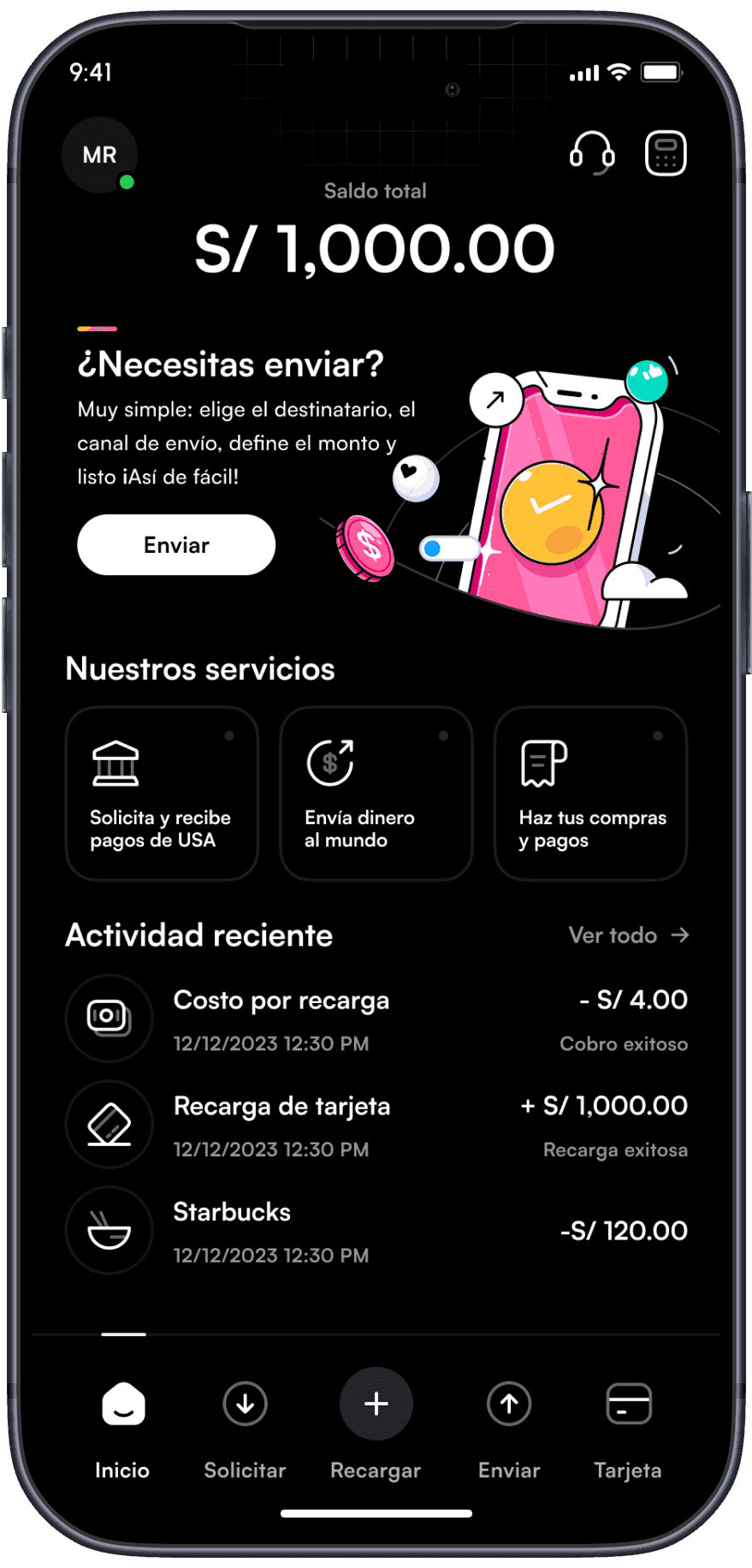
As the product expanded, the Home experience needed to become more than an account balance. It had to surface the most relevant actions, reduce navigation effort and make financial information immediately understandable.
Rather than treating the dashboard as a collection of widgets, I organized it around user priorities.
The balance became the primary anchor, followed by contextual security prompts, core services, and recent activity. Every section was intentionally ordered according to how frequently users interacted with it.
Illustrations and a lighter visual language reinforced B89's approachable identity while maintaining the clarity expected from a financial product.
The redesigned Home became the central hub of the product, making daily banking faster to understand and reducing the effort required to discover core services such as remittances, card management and international payments.
Designing Cross-Border Remittances
Sending money internationally often feels more complicated than it should. Users need to choose recipients, understand exchange rates, select delivery methods and trust that their money will arrive safely.
For many people using B89, remittances were not occasional transactions they were part of their everyday financial routine. The experience needed to reduce uncertainty while keeping every step transparent.
Instead of treating money transfers as a long banking form, I redesigned the experience as a guided flow that progressively revealed information.
Each screen focused on a single decision selecting a recipient, defining the transfer, reviewing exchange details and confirming the operation allowing users to move through the process with greater confidence and less cognitive effort.
Screen 1 of 10
The redesigned remittance experience transformed a complex international transfer into a predictable, step-by-step journey. By simplifying decision making and exposing information progressively, users could complete transfers with greater confidence while maintaining full visibility of exchange rates, recipients and transaction status.
Building Trust Through Card Management
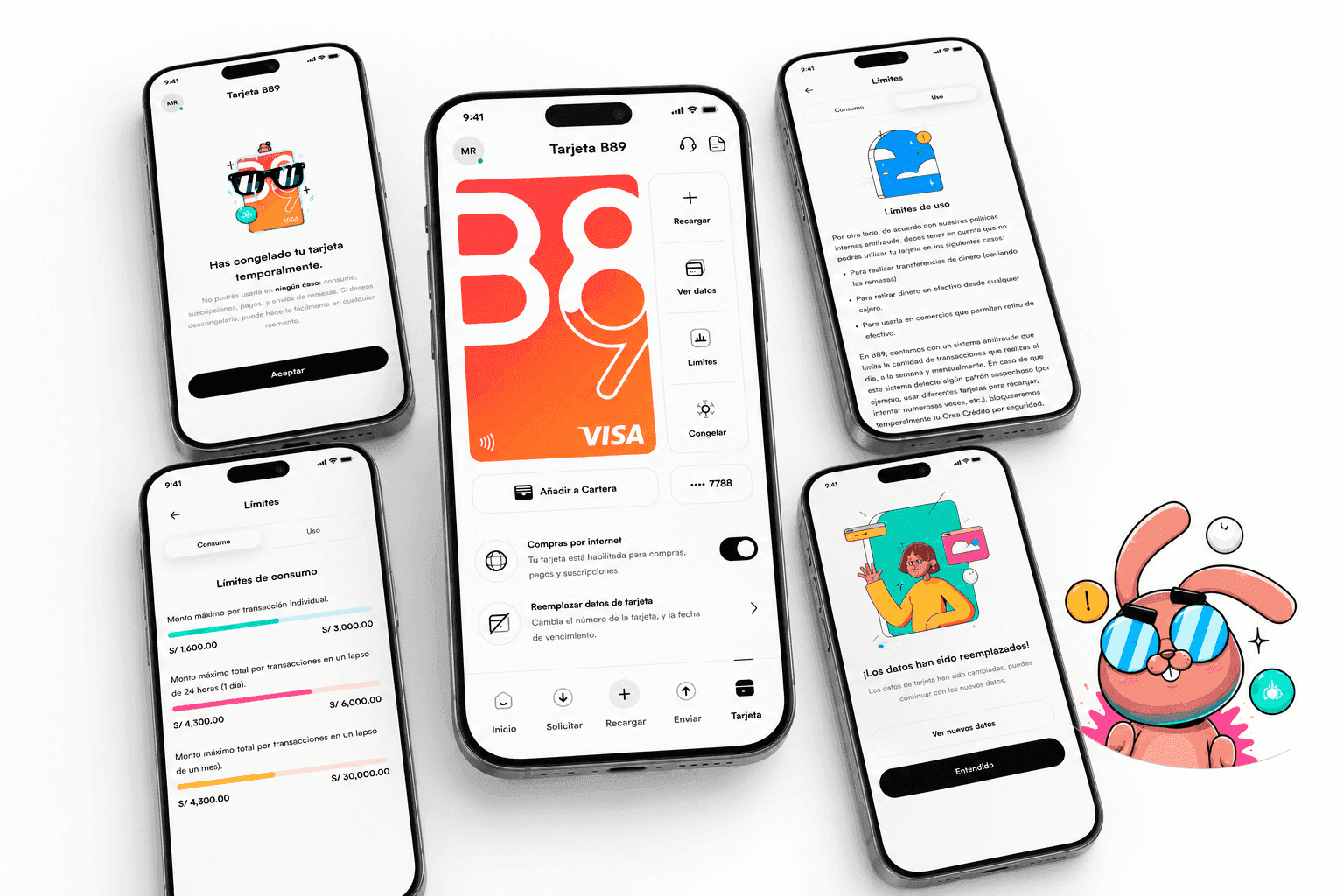
For many users, the B89 card represented their first tangible interaction with the product. Beyond simply viewing card details, users needed confidence that they could manage limits, security settings and everyday payments without contacting support.
The experience had to balance flexibility with a strong sense of control over their finances.
Rather than treating card management as a collection of isolated settings, I designed it as a centralized experience where every important action from activation and spending controls to limits and card details was organized around clarity and immediate feedback.
This reduced uncertainty while giving users full visibility into the status of their card at every moment.
The redesigned card experience gave users greater confidence in managing their finances independently. By centralizing controls, limits and card information into a cohesive interface, everyday banking became more transparent, predictable and easier to navigate.
Scaling One Product Across Multiple User Journeys
Unlike traditional banking apps that separate features into disconnected experiences, B89 brought together remittances, card management, international payments and account services inside a single product. The challenge wasn't designing individual screens—it was ensuring every journey felt like part of the same banking experience.
Remittances
Cross-border money transfers designed for clarity and confidence.
Card Management
A centralized experience for controlling everyday spending and card settings.
Account & Security
Profile, verification and account settings designed around transparency and trust.
International Payments
Simple payment experiences tailored for users supporting family across countries.
One Design System. Multiple Experiences.
A shared design language ensured every feature felt familiar while allowing each journey to solve a different financial need.
How the product held together
Human Before Banking
Financial experiences should feel understandable before they feel powerful.
Progressive Disclosure
Present information only when users need it, reducing cognitive load throughout complex financial tasks.
Build Trust Visually
Clear hierarchy, transparent feedback and consistent interactions reinforce user confidence.
Consistency Creates Confidence
Shared patterns across every journey make the product easier to learn and easier to trust.
Building a Scalable Design System
As B89 expanded across remittances, card management, onboarding, payments and account experiences, maintaining consistency became increasingly important.
Rather than designing isolated screens, the product needed a shared visual language that could support rapid iteration while keeping every interaction familiar to users.
I established a reusable design foundation based on shared components, semantic styles and consistent interaction patterns.
The objective wasn't only visual consistency—it was making future features easier to design, prototype and hand off to engineering while reducing duplicated work across the product.
Reusable Components
Shared UI building blocks accelerated feature development across the entire product.
Consistent Visual Language
Typography, spacing and color decisions remained consistent across every user journey.
Predictable Interactions
Reusable interaction patterns reduced learning and made every feature feel familiar.
Engineering Collaboration
A structured design system simplified handoff and reduced ambiguity during implementation.
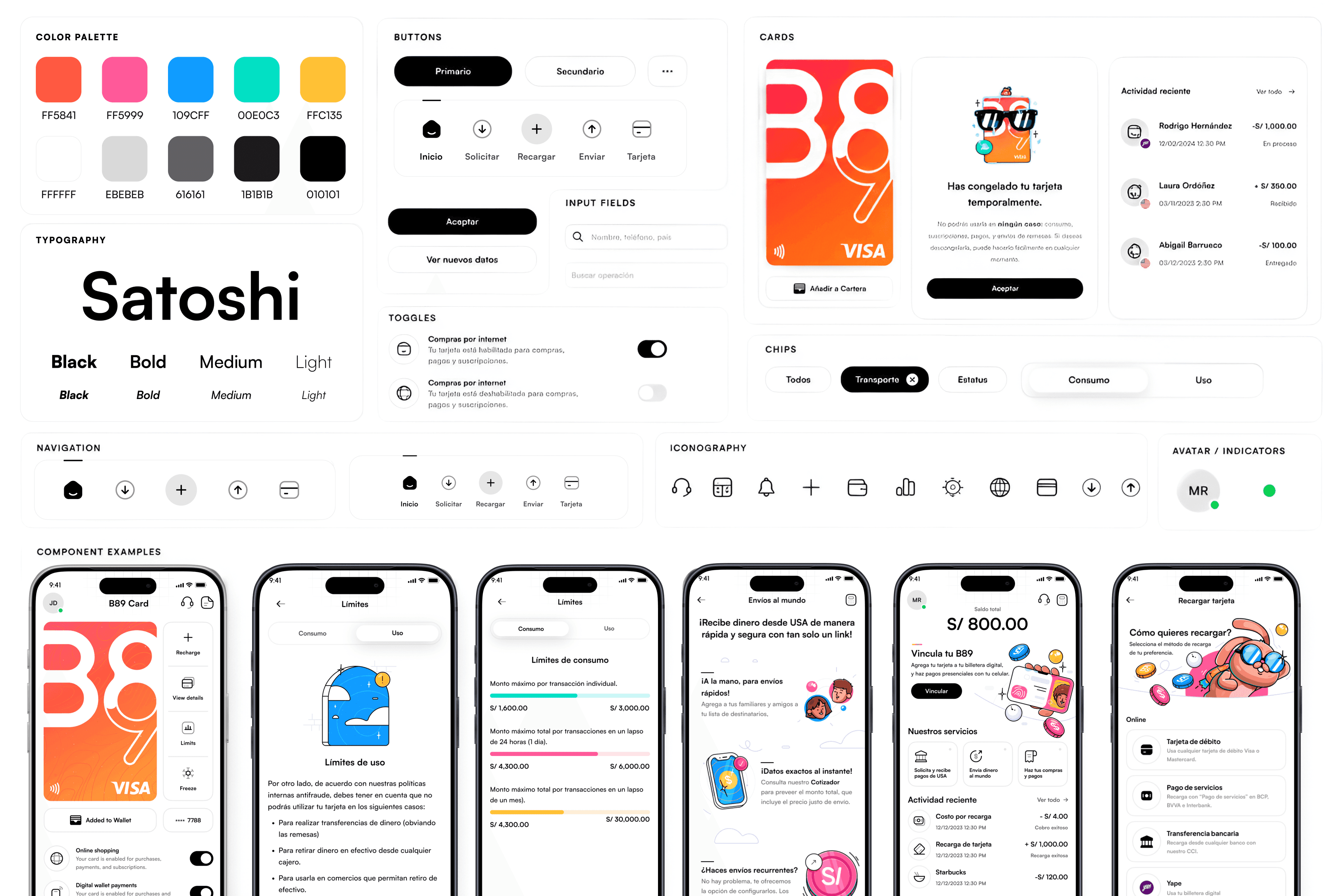
The design system became the foundation for scaling B89. It enabled faster product iterations, more consistent implementation across features and smoother collaboration between design and engineering as the platform continued to evolve.
Designing Beyond the Handoff
Shipping a polished financial product required more than delivering high-fidelity mockups.
As development progressed, every feature needed continuous collaboration between design, QA and engineering to ensure the final experience matched the original design intent while respecting technical constraints.
Instead of considering handoff as the end of the design process, I stayed involved throughout implementation.
I reviewed staging builds, validated interfaces on real devices, documented inconsistencies, tested Flutter limitations when necessary and collaborated closely with developers to adapt solutions without compromising usability.
Product Design
Define the user experience, interaction model and visual direction.
Interactive Prototype
Validate flows before development begins.
Developer Handoff
Deliver production-ready specifications and reusable assets.
QA & Device Testing
Review staging builds and validate implementation on real devices.
Technical Collaboration
Refine interactions based on engineering constraints without losing usability.
Product Iteration
Improve details uncovered during implementation and testing.
Production Release
Ship experiences that remain faithful to the original design vision.
Close collaboration between design, QA and engineering reduced implementation inconsistencies, accelerated iterations and helped deliver a more polished product experience across every release.
What the work delivered
B89 evolved from a remittance-focused mobile application into a broader digital banking experience combining cross-border transfers, card management and everyday financial services.
Scalable Foundation
Established reusable interaction patterns and shared UI components that supported rapid feature expansion while maintaining consistency across the product.
Cross-functional Collaboration
Worked closely with product, QA and engineering throughout implementation, refining interactions and validating production quality across multiple releases.
Business Growth
Helped shape the core product experience by designing most of the mobile application, supporting the platform as it continued expanding with new services and user journeys.
Designed the vast majority of the mobile product experience.
Across onboarding, remittances, cards, KYC, profile and payments.
Supported the product from early development through multiple releases.
One cohesive banking experience across both platforms.
The easiest experiences often required the most exploration. Breaking complex banking operations into smaller, understandable steps consistently improved usability.
B89 pushed me to think beyond individual screens and focus on complete user journeys. It taught me that empathy, clarity and collaboration are what ultimately transform complex financial operations into products people feel comfortable using every day.