Bringing People Together Through Play
Mimik is a mobile party game inspired by classic charades, designed to remove the friction found in existing experiences. Instead of intrusive ads, expensive subscriptions and locked content, I created a playful, family-friendly experience focused on instant fun, expressive visuals and seamless local gameplay. From the first idea to a fully functional Android MVP, I designed the complete product, visual identity, mascot, game UX and production-ready interface.
Personal Project
Global
Product Design, UX Research, Game UX, Interaction Design, Visual Identity, Character Design, UI Design, Prompt Design, AI Art Direction, Prototyping, Front-end Collaboration
At a glance
3–5 Days
Gaming · Entertainment · Party Games
iOS · Android
Founder • Product Designer
Product Strategy, UX Research, Product Design, Game UX, Interaction Design, Visual Design, Illustration Direction, Prompt Design, AI Art Direction, Rapid Prototyping, Front-end Development
Solo Project

The idea & the opportunity
Mimik started after a family game night where we struggled to find a charades app that wasn't filled with ads, subscriptions or locked content. Instead of paying to remove frustrations, I decided to build a game that was fun from the very first launch, with premium design, zero ads and every category available to everyone.
Most party games rely on aggressive monetization rather than creating memorable experiences. I saw an opportunity to design a game that focused on people instead of purchases, combining polished interaction design, expressive visuals and thoughtful gameplay into an experience families and friends could simply enjoy together.
How a round comes together
How every interaction was designed to keep the game moving while making every player feel included.
Instead of adding unnecessary menus or interruptions, every step was optimized so groups could start playing in seconds and stay focused on having fun together.
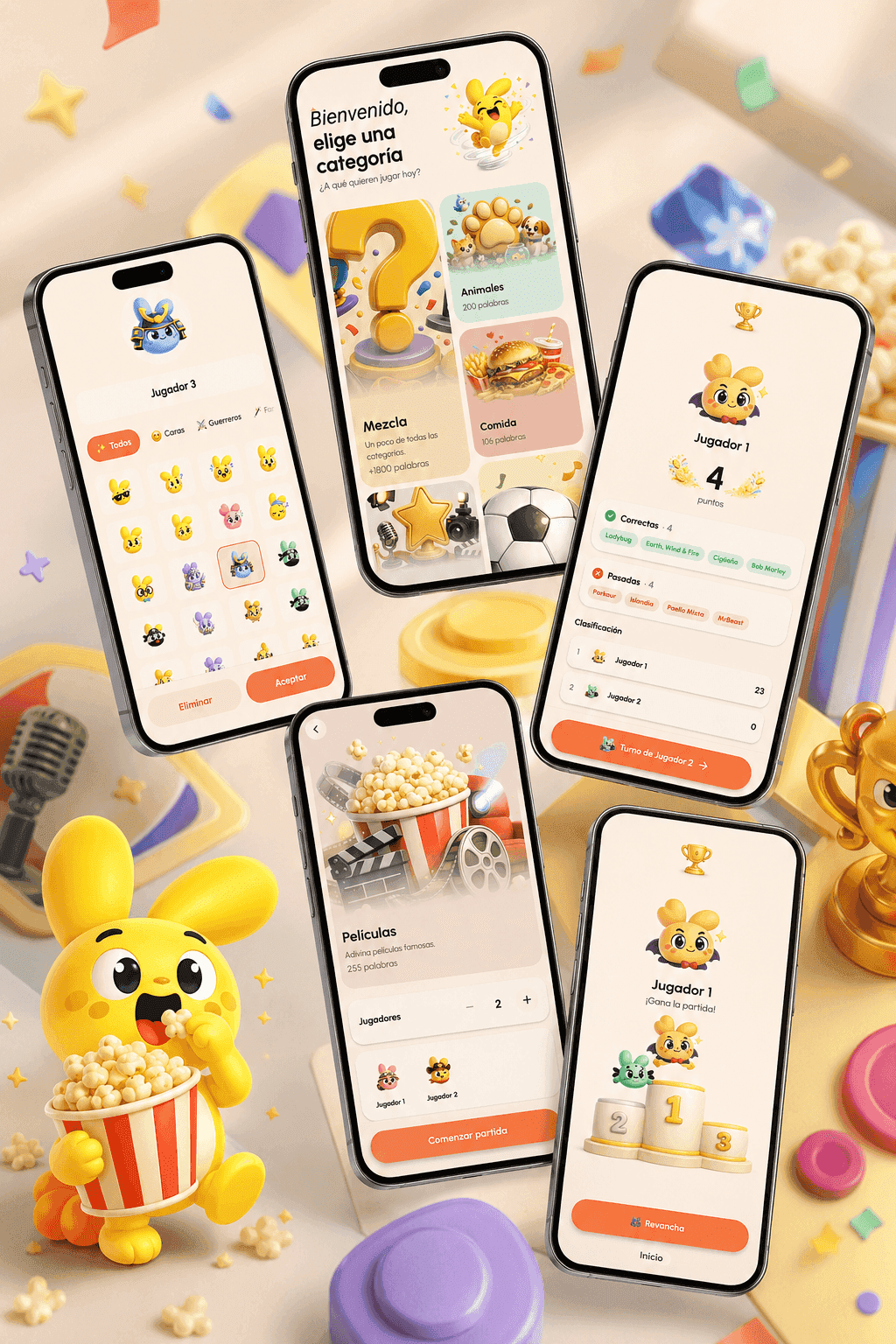
Choose a Category
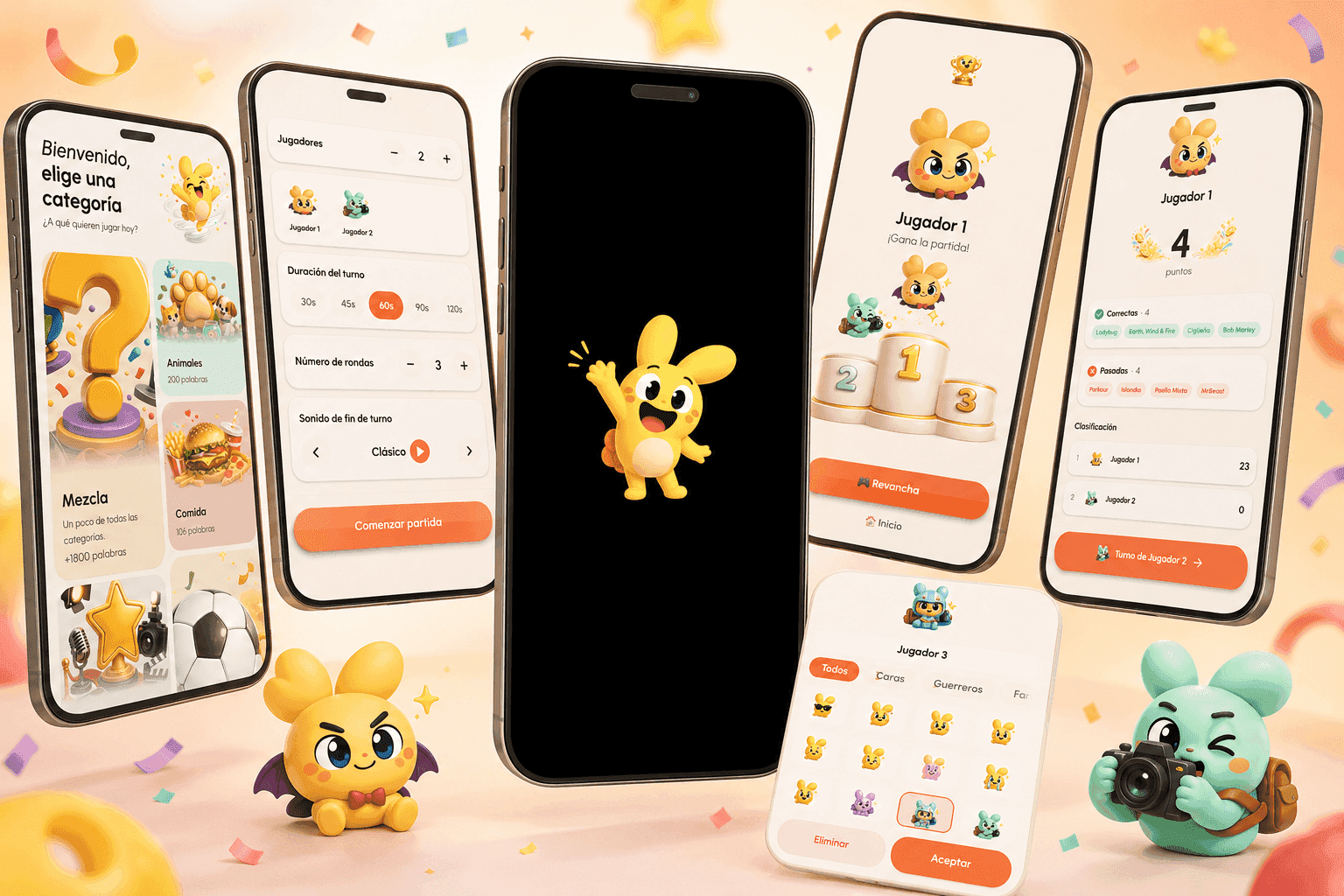
Players immediately discover dozens of themed decks through colorful illustrations and expressive visual cues, making it easy to find a game everyone wants to play.
Set Up the Match
Select the game mode, number of rounds, timer and players in just a few taps. The setup stays simple so the focus remains on the people, not the configuration.
Play Together
The phone becomes the game. Tilt interactions, gestures and real-time feedback create an energetic experience where every turn feels dynamic and intuitive.
Celebrate Every Turn
Animated reactions, playful feedback and expressive illustrations reinforce every correct guess, making each round feel rewarding regardless of who wins.
Ready for the Next Round
The game seamlessly transitions to the next player, supporting pauses and continuing naturally so family gatherings and parties never lose their rhythm.

Every interaction was designed to make generative AI feel less like a tool and more like a creative storytelling companion for families.
Four guiding principles
Every design decision was guided by four principles that made playing together faster, more accessible and more enjoyable.
Remove Barriers to Play
Instead of asking players to create accounts, watch ads or unlock content, the goal was to let every group start playing immediately.
Free Experience • No Ads • Instant PlayDesign for Every Generation
The interface was designed to be immediately understandable for children, teenagers, parents and grandparents without requiring instructions.
Accessibility • Legibility • SimplicityKeep the Game Moving
Every interaction was optimized to reduce waiting time, support quick decisions and keep the group's attention on the people instead of the phone.
Game Flow • Gestures • Turn ManagementBuild Joy Into Every Interaction
Beyond functionality, the experience was designed to feel expressive through illustrations, playful motion, delightful feedback and a memorable mascot that gave the game its own personality.
Mascot • Illustration • Motion • Personality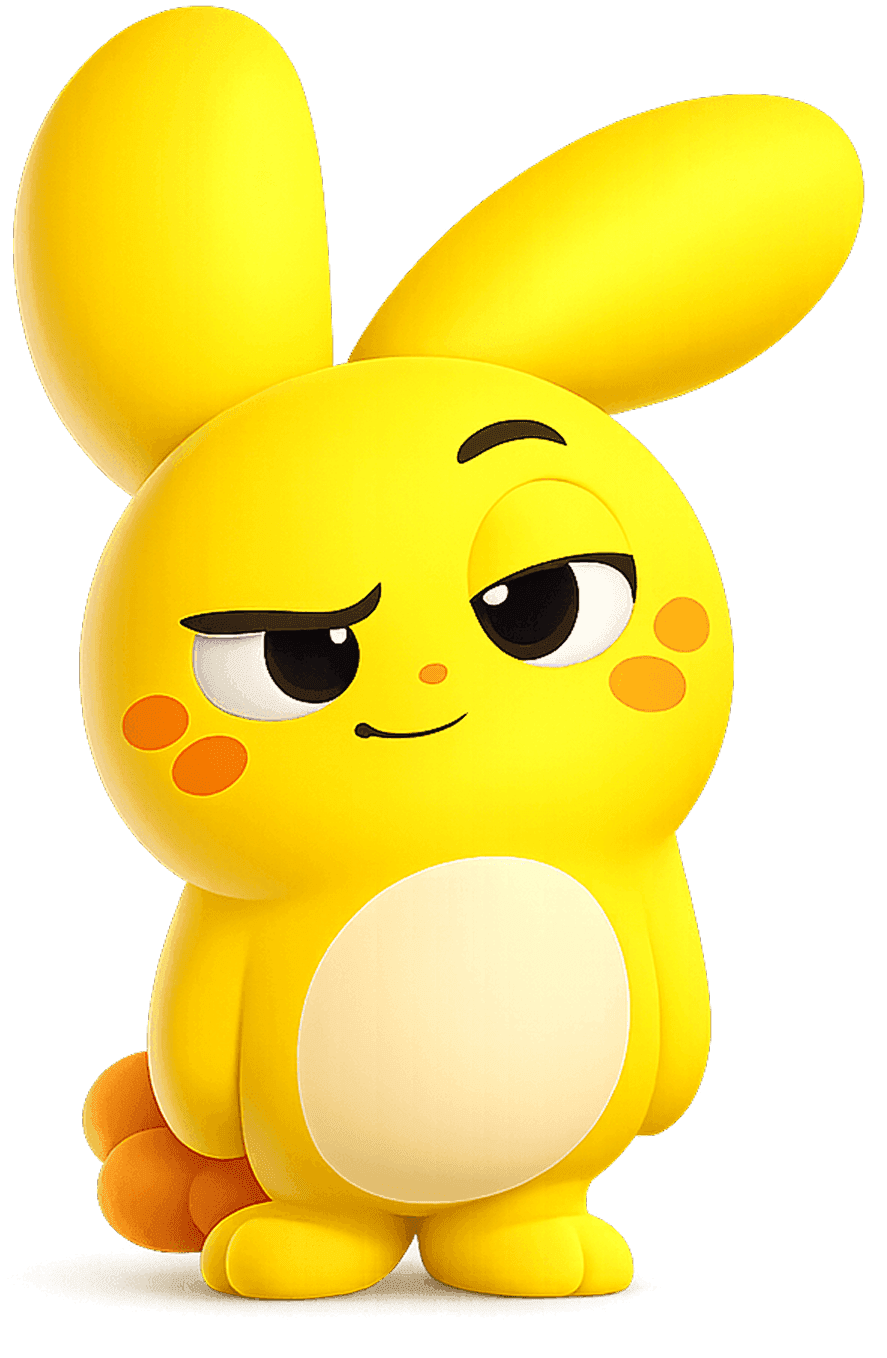
Removing Friction Before the Fun
Party games should disappear into the background, allowing people to focus on laughing together rather than navigating menus, waiting through ads or figuring out complicated rules.
Most existing charades apps interrupt the experience with subscriptions, locked categories, intrusive advertising and unnecessary friction before the game even begins.
The challenge was to redesign the entire experience around one principle: get people playing as quickly as possible and keep the momentum alive throughout every round.
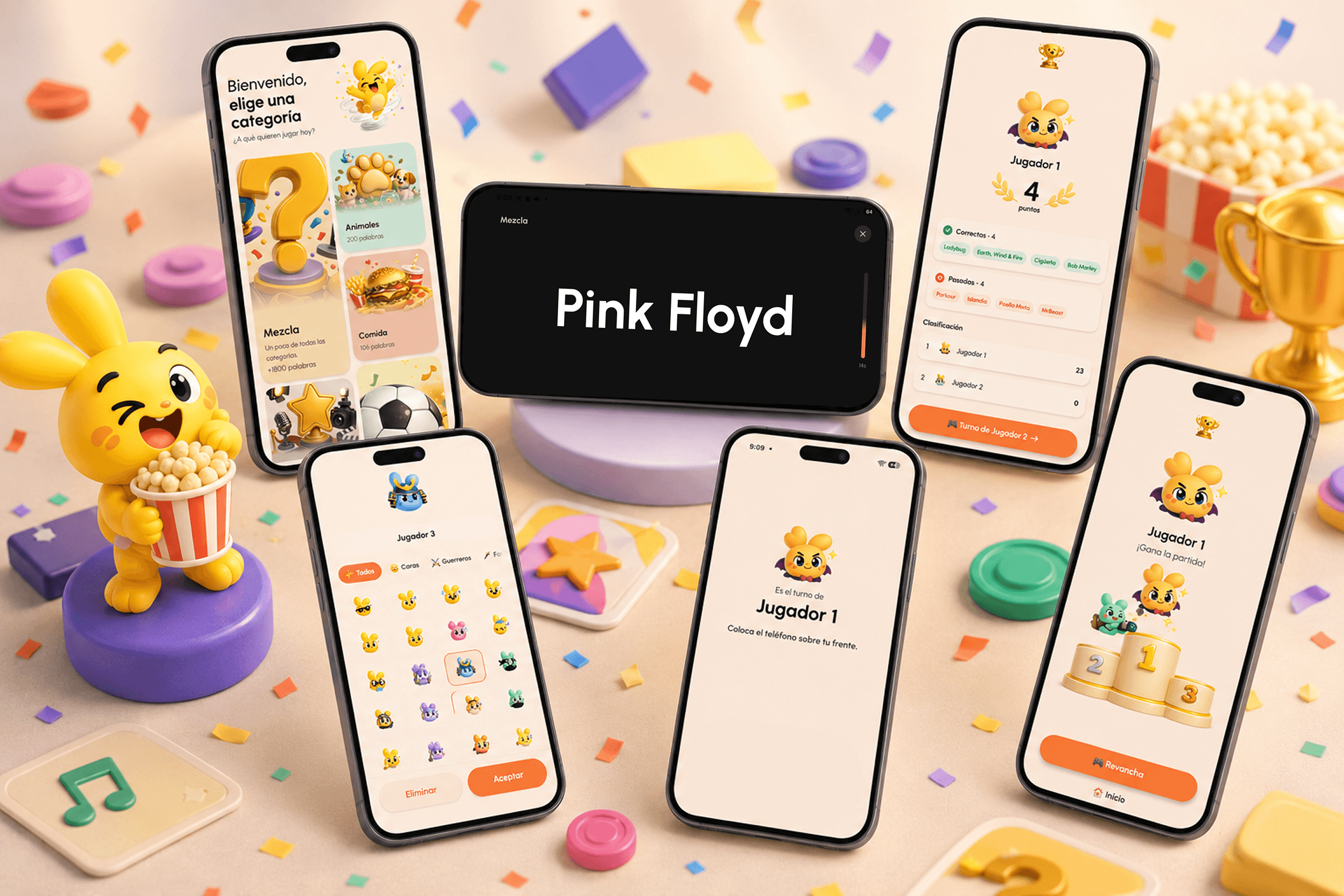
Remove Friction Before the Game Starts
Players shouldn't create accounts, watch ads or unlock categories before having fun.The first experience had to feel immediate and welcoming.
Design for Every Age Group
The interface needed to work equally well for children, teenagers, parents and grandparents without requiring explanations.
Keep Attention on the Group
During gameplay, the phone should become almost invisible. Every interaction had to support conversation, movement and laughter instead of distracting from it.
Create Delight Beyond Gameplay
llustrations, expressive characters, animations and playful feedback transformed a simple guessing game into an experience with its own personality.
A foundation built on real-world play
Rather than creating another digital party game, the goal was to design an experience that encouraged real-world interaction. Every product decision prioritized simplicity, accessibility and continuous gameplay so people could spend less time looking at their phones and more time enjoying each other's company.
Instant Fun
Players should be able to start a game within seconds without creating accounts, watching ads or navigating unnecessary setup.
Everyone Can Play
Design interactions simple enough for children, intuitive enough for adults and accessible enough for people who have never played before.
Keep the Momentum
Reduce downtime between turns through quick interactions, clear feedback and thoughtful game flow that keeps the energy of the group alive.
Personality Creates Memories
Build a playful visual identity through expressive illustrations, the Mimik mascot, motion and delightful details that make the experience memorable beyond the gameplay itself.
Creating Instant Play
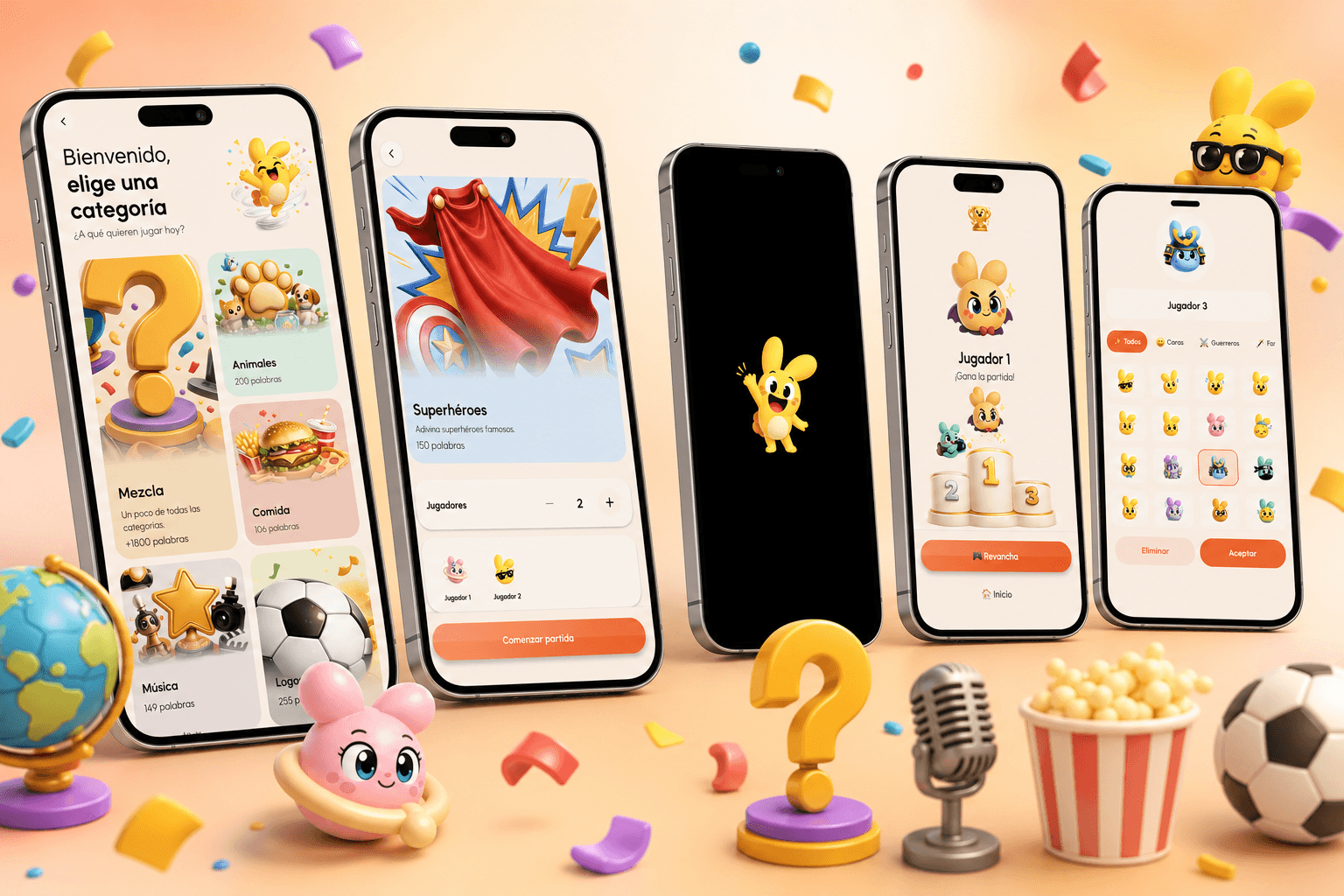
Party games often introduce friction before the fun even begins. Account creation, advertisements, locked content and complex menus interrupt what should be an immediate social experience.
For Mimik, the challenge was designing a home experience that helped players choose a category, understand the game and start playing within seconds.
Rather than treating the Home screen as a traditional menu, I designed it as the starting point of the entire party experience.
Categories became the primary navigation, while game modes, settings and multiplayer options remained easily accessible without competing for attention.
The interface was intentionally playful, colorful and lightweight, allowing players of all ages to immediately understand where to begin without reading instructions.
The redesigned Home reduced the time between opening the app and starting a game, making the experience feel immediate, approachable and focused on playing together instead of navigating menus.
Designing an End-to-End Storytelling Journey
A great party game isn't defined by individual screens but by how effortlessly players move from one turn to the next.
Every interruption whether choosing a category, passing the phone, pausing the game or calculating results can break the group's momentum. The challenge was designing an experience that kept everyone engaged while requiring almost no explanation.
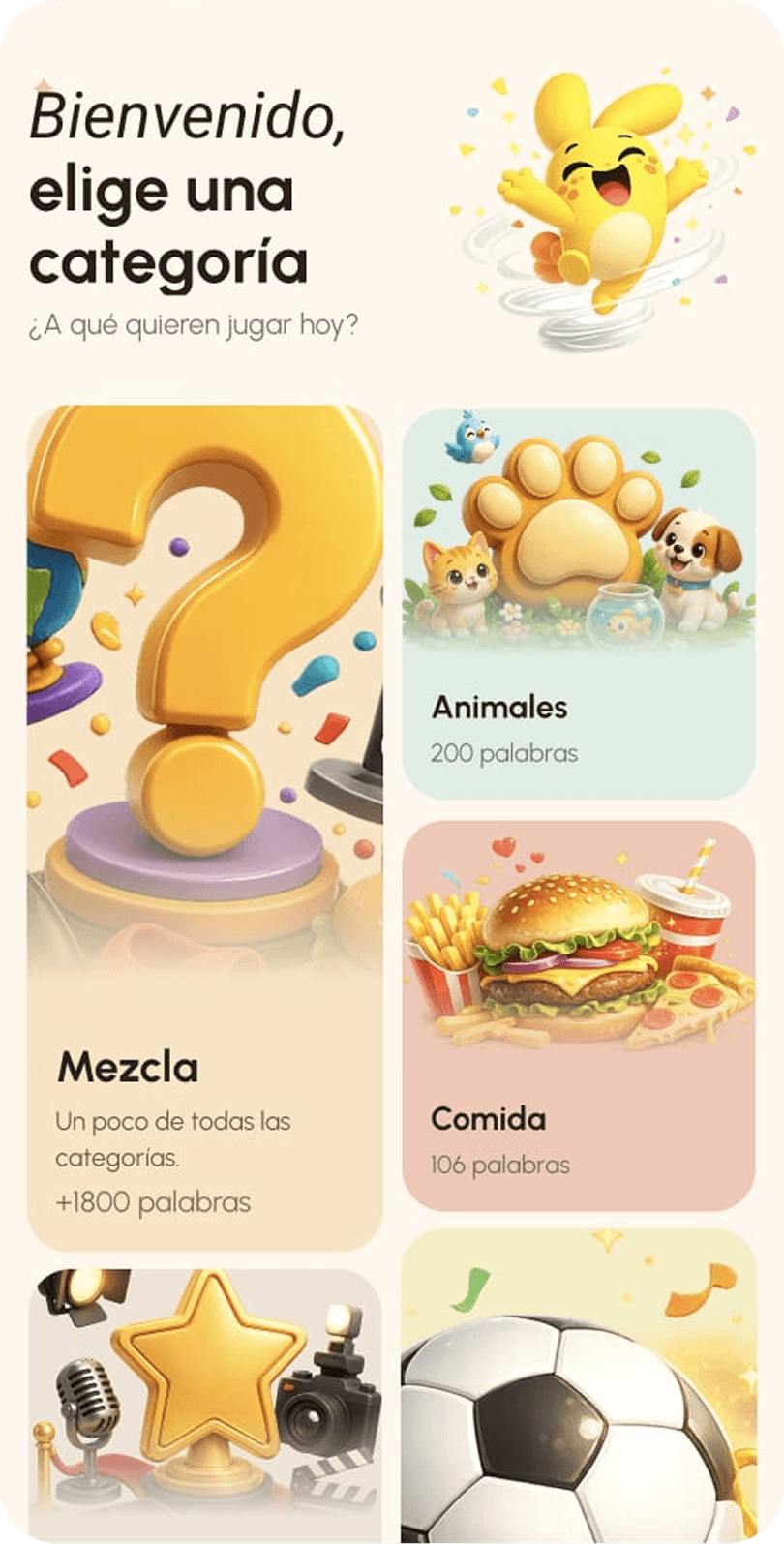
Rather than treating gameplay as isolated interfaces, I designed the experience as one continuous flow where every screen naturally led to the next.
From selecting a category and configuring the match to gameplay, score tracking and final results, every interaction was optimized to minimize friction and maximize the time spent actually playing together.
Screen 1 of 9
The complete gameplay flow reduced setup time, eliminated unnecessary interruptions and created a party experience that felt intuitive from the first round to the last.
Designing an Engaging Gameplay Experience
Most charades games focus only on showing the next word. The real experience, however, happens between people laughing, reacting and passing the phone around.
The interface needed to stay almost invisible, allowing players to focus on facial expressions, conversations and the excitement of guessing instead of interacting with menus or controls.
Rather than filling gameplay with buttons and distractions, I designed an interface that communicated only what mattered at each moment.
Large typography, immediate visual feedback, intuitive device gestures and a clean information hierarchy kept every turn fast, readable and enjoyable for players of all ages.
Every interaction was intentionally simplified so the game itself not the interface became the center of attention.
The final gameplay experience transformed the phone into a facilitator rather than the focus of the game. By reducing interface complexity and emphasizing readability, motion and immediate feedback, every round felt natural, energetic and easy to understand for both new and experienced players.

Scaling One Party Game Across Multiple Play Styles
Rather than building disconnected game modes, Mimik was designed as a single party game platform where every category and gameplay variation shared the same intuitive interaction model. The challenge wasn't creating more content it was ensuring every game mode felt instantly familiar while still offering a fresh experience.
Category Packs
From Movies and Music to Logos, Sports and Animals, every category follows the same interaction patterns while delivering different challenges.
Classic Mode
The traditional Mimik experience focused on fast-paced guessing with simple, accessible gameplay for every group.
Endless Fun
Offline gameplay, instant setup and hundreds of words create a replayable experience that works for families, friends and parties alike.
Team Mode
Players collaborate in teams while maintaining the same intuitive mechanics and quick turn transitions.
One Product. Endless Game Nights.
A shared interaction language ensured every category, mode and future expansion felt like part of the same playful experience.
How the game held together
Learn Once, Play Forever
Every interaction behaves consistently so players can focus on the game instead of learning new controls.
Instant Accessibility
Anyone should be able to join within seconds, regardless of age or gaming experience.
Designed for Groups
The interface supports shared play by prioritizing visibility, readability and effortless device handoffs.
Built to Grow
New categories, themes and gameplay modes can be introduced without changing how players interact with the product.
Building a Playful Visual Language
As Mimik evolved from an early prototype into a fully playable experience, visual consistency became essential across onboarding, gameplay, categories and results.
Rather than treating each screen as an isolated interface, every interaction needed to reinforce the same playful personality while remaining clear enough for fast-paced group play.
Instead of building a large enterprise Design System, I established a lightweight visual foundation based on reusable components, consistent spacing, expressive illustrations and recognizable interaction patterns.
A shared color palette, typography hierarchy, mascot language and gameplay components ensured every new screen felt instantly familiar while allowing the product to evolve rapidly during development.
Diverse Categories
From Movies and Music to Logos, Sports and Animals, every category offers fresh challenges while preserving the same intuitive gameplay.
Multiplayer Experience
Designed for families and friends, every interaction supports fast turn-taking, group participation and effortless shared play.
Offline First
No accounts, subscriptions or internet connection required. Players can start a game instantly, anywhere.
Built for Replayability
Multiple categories, game modes and customizable settings encourage every match to feel different while keeping the experience familiar.
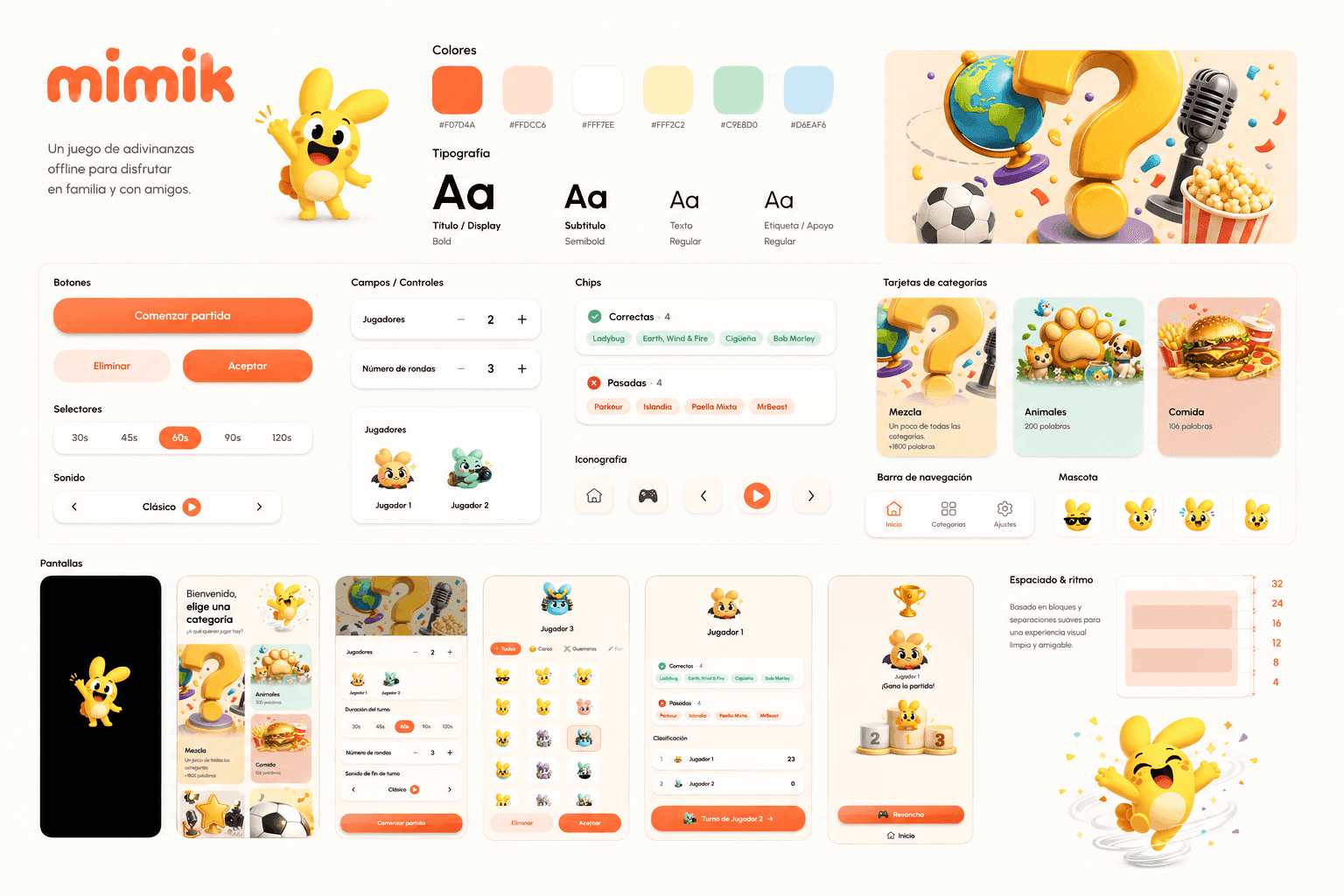
The shared visual language accelerated iteration, reduced design inconsistencies and helped Mimik feel like one cohesive experience despite being developed in a short period of time.
Designing Beyond the Prototype
Building Mimik required much more than designing polished interfaces. The challenge was transforming an idea into a fully playable mobile game while balancing product design, AI-assisted development and continuous iteration.
Because the project evolved rapidly, every feature needed to be tested, refined and validated on real devices to ensure gameplay remained simple, reliable and enjoyable.
Rather than treating AI-generated output as the final product, I used it as a starting point for rapid experimentation.
Every screen, interaction and gameplay mechanic was reviewed, refined and often redesigned in Figma before being integrated into the application. Continuous testing with Claude-generated code allowed the product to evolve quickly while preserving a cohesive user experience.
Product Vision
Define the gameplay concept, visual identity and overall experience before writing code.
UI Exploration
Design the core interfaces, navigation and gameplay flow in Figma.
AI-Assisted Development
Implement the application with Claude while continuously reviewing architecture, interactions and functionality.
Iteration & Refinement
Improve layouts, animations, illustrations and gameplay details based on constant testing.
Real Device Validation
Play dozens of complete matches, fixing usability issues, timing and interaction edge cases.
Production MVP
Ship a fully functional offline application with reusable architecture ready for future expansion.
Ready for Launch
Finalize assets, polish the experience and prepare the product for public release.
Designing and developing in parallel accelerated the product dramatically. By combining rapid AI-assisted implementation with continuous design refinement, Mimik evolved from a simple idea into a complete offline party game ready for real players.
What the work delivered
Mimik transformed a common party game into a polished, ad-free mobile experience focused on families and friends. Rather than monetizing through interruptions, the product prioritized accessibility, quality and long-term enjoyment.
Complete Product
From the first concept to a fully functional APK, every aspect of the experience—including gameplay, visual identity, illustrations, mascot, interactions and development—was designed as one cohesive product. By combining product design with AI-assisted development, Mimik moved rapidly from idea to implementation while maintaining high design quality through continuous iteration and refinement.
Foundation for Growth
The current architecture supports future category packs, multiplayer improvements, achievements, new game modes and additional content without changing the core gameplay experience.
Designed every aspect of the experience, from research and UX to interface design, mascot, illustrations and development direction.
Built as a complete offline experience with no paywalls, intrusive advertising or unnecessary account creation.
Designed, developed and shipped a fully playable mobile game in less than a week through rapid iteration and AI-assisted development.
Built with a shared codebase designed for deployment across both major mobile platforms.
Removing friction, unnecessary decisions and complicated settings created a faster and more enjoyable experience than adding more gameplay mechanics.
Building Mimik showed me how much modern product design has evolved. Designing a digital product is no longer limited to wireframes and interfaces it also means orchestrating AI tools, validating code, directing visual assets and continuously refining the experience until everything feels intentional.
More importantly, Mimik reinforced something I strongly believe: technology should never become the center of the experience. The best products quietly step aside, allowing people to focus on what truly matters in this case, sharing moments, laughing together and creating memories with friends and family.
A real product, documented in the open
Mimik wasn't just a set of screens. The public repository holds the product thinking, the UX decisions and the technical foundation behind the game — open for anyone who wants to see how it was actually built.