Designing a Scalable Crypto Ecosystem for Emerging Markets
Banexcoin evolved from an early-stage cryptocurrency exchange into a multi-platform financial ecosystem used across Peru and later expanded to Bolivia. Over nearly three years, I helped redesign the core product experience, build a scalable design system, and shape complex trading workflows that balanced the needs of first-time crypto users and experienced traders.
Banexcoin
Peru → Bolivia
Product Design, UX Research, Interaction Design, Design System, Prototyping, Developer Handoff.
At a glance
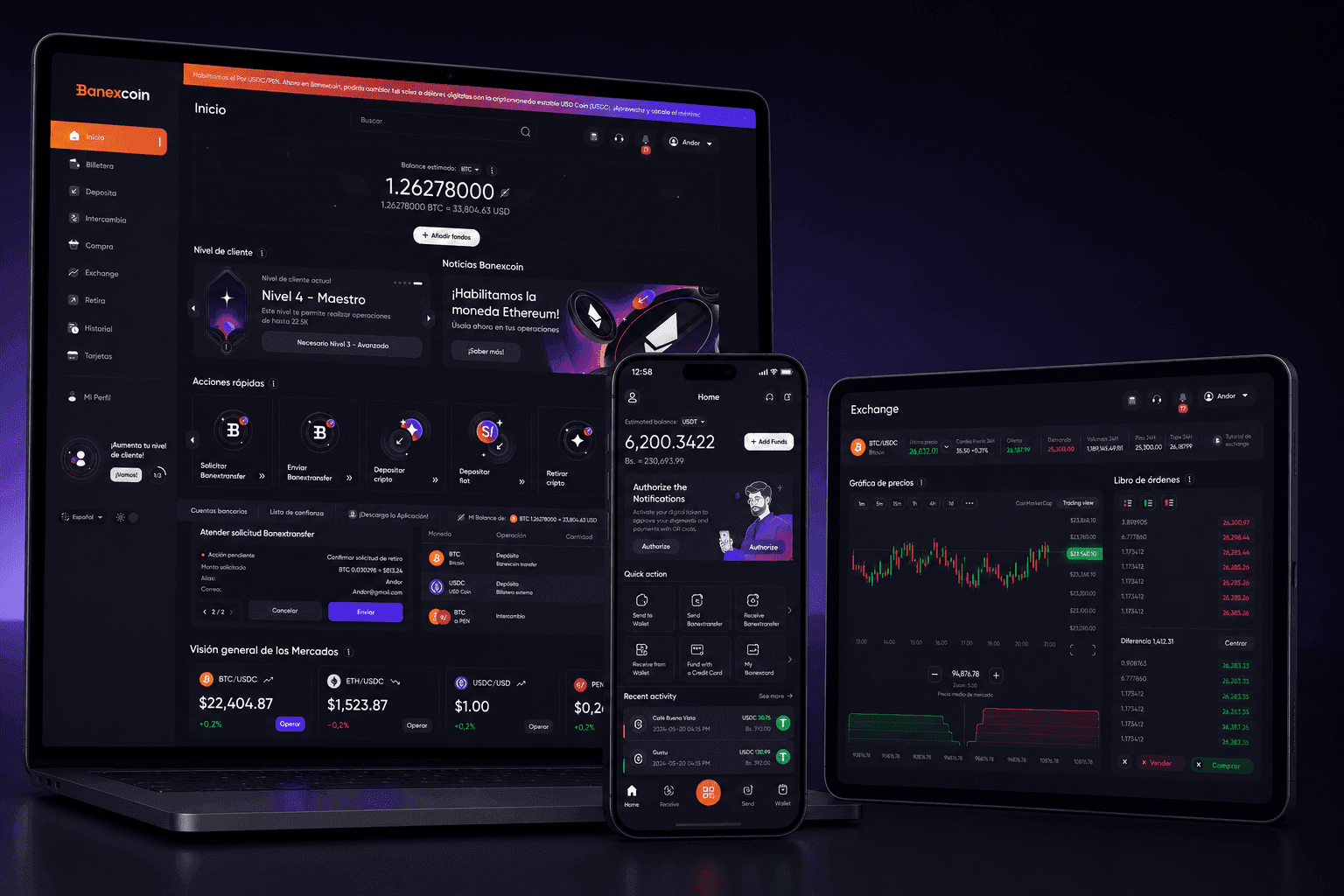
Product Designer
3 Years
FinTech / Cryptocurrency
iOS, Android, Responsive Web, Admin Dashboard, Landing Pages
UX Research, Product Design, Interaction Design, Design Systems, Prototyping, Developer Handoff
CEO · PM, Design Lead, Product Designer, 2–3 Developers, QA Engineer
The company & the opportunity
Banexcoin was an emerging cryptocurrency exchange focused on making digital assets more accessible across Latin America. Starting in Peru and later expanding into Bolivia, the company aimed to simplify cryptocurrency adoption through a secure, approachable, and multi-platform ecosystem. Its long-term vision was ambitious: become a trusted regional alternative to global exchanges while maintaining a closer relationship with local users.
When I joined the project, Banexcoin already had an MVP in production with active users. While the foundations were in place, many critical experiences were still missing or lacked the level of usability expected from a modern financial product. The challenge wasn't simply redesigning screens—it was helping transform an early-stage exchange into a scalable product capable of supporting new features, multiple platforms, and future market expansion.
Three years, one ecosystem
A three-year journey from an early MVP to a fully connected, cross-platform ecosystem serving two markets.
Early MVP
Joined the project while Banexcoin was already in production with active users but still lacked many core experiences.
Core Product Redesign
Redesigned the UX, navigation and visual system while introducing major product modules.
Cross-Platform Expansion
Expanded the experience across iOS, Android and Responsive Web with a consistent Design System.
Feature Growth
Designed complex modules including Exchange, Wallet, Trading, Deposits, Security and Portfolio Management.
Bolivia Expansion
Adapted the product for a new market with localized payment methods, QR-first workflows and updated onboarding.
Each milestone introduced new product challenges, requiring the experience to continuously evolve while maintaining consistency across an increasingly complex ecosystem.
Four strategic principles
Every major product decision was guided by four strategic principles that balanced business goals with user needs.
Build Trust Through Clarity
Rebuilding user confidence through transparent interactions, clear financial information, strong security cues and a consistent product experience.
Security · Transparency · ConfidenceSimplify Complex Trading
Make cryptocurrency trading approachable for first-time investors while preserving the tools and flexibility expected by experienced traders.
Exchange · Wallet · PortfolioReduce Friction Across Critical Flows
Streamline onboarding, KYC, deposits and everyday transactions to help users complete tasks with fewer steps and greater confidence.
Onboarding · KYC · DepositsCreate One Ecosystem
Unify every product surface into one consistent experience across mobile, web and future platform expansions.
Cross-platform · Design SystemWhat the product needed to solve
Complex Financial Workflows
Designing secure yet intuitive flows across deposits, trading, wallet management and transaction history.
Growing Product Complexity
Continuously expanding the product with new modules while maintaining consistency and usability.
Balancing Beginner & Advanced Users
Creating an experience accessible to first-time crypto users without limiting experienced traders.
Scaling Across Platforms
Maintaining a consistent experience across iOS, Android, Responsive Web and future market expansion.
A scalable foundation, not isolated screens
Rather than redesigning isolated screens, the objective was to establish a scalable product foundation capable of supporting future modules, multiple platforms and new markets.
Scalable Foundation
Build a flexible design system capable of supporting future modules and product growth.
Prioritize Core Flows
Focus on the actions users perform most frequently, including balances, deposits, trading and portfolio management.
Progressive Complexity
Keep the experience approachable for beginners while preserving powerful tools for experienced traders.
Design Beyond Launch
Create a product foundation capable of expanding across new platforms and future markets.
Creating a Clear Financial Overview
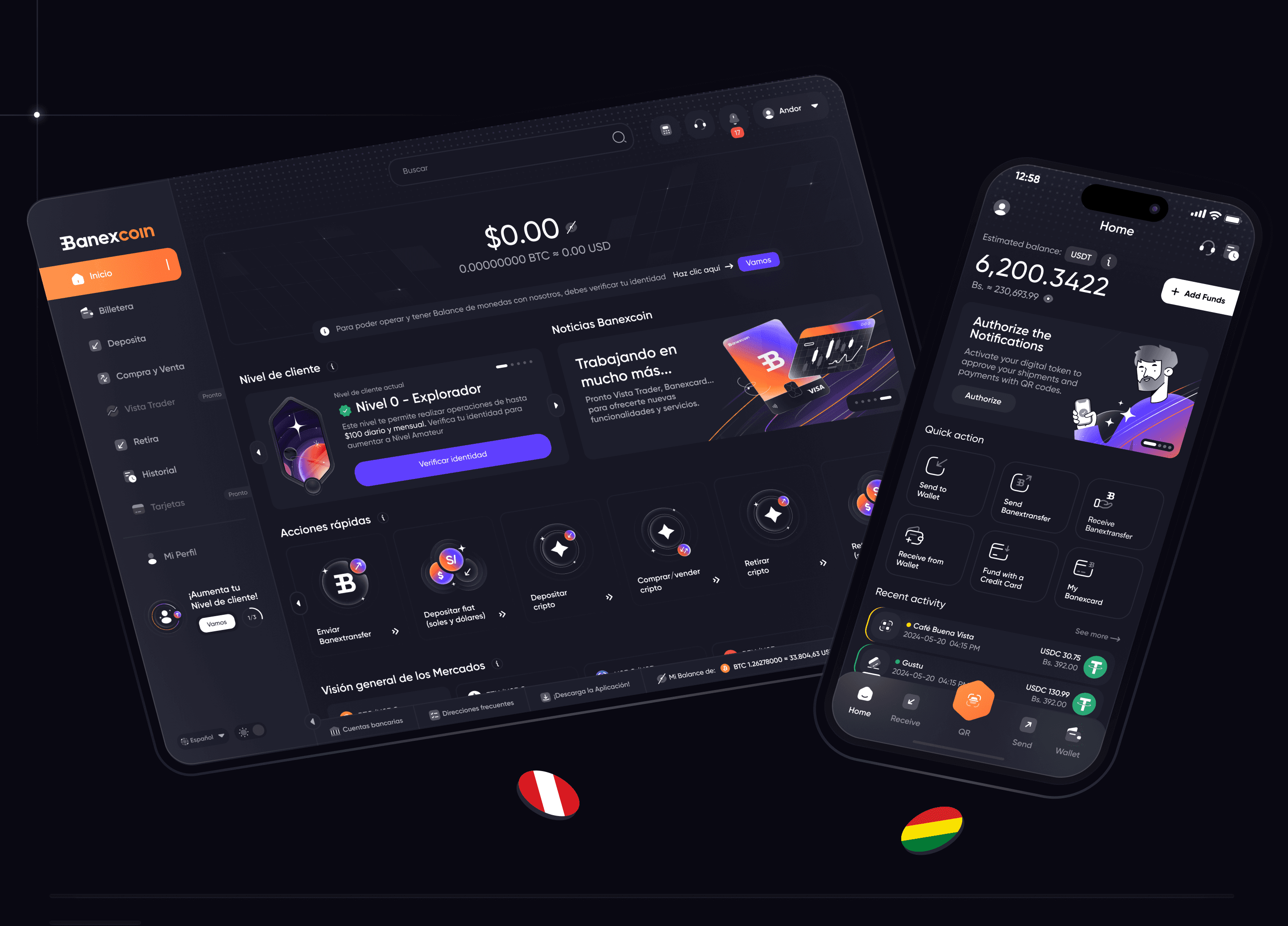
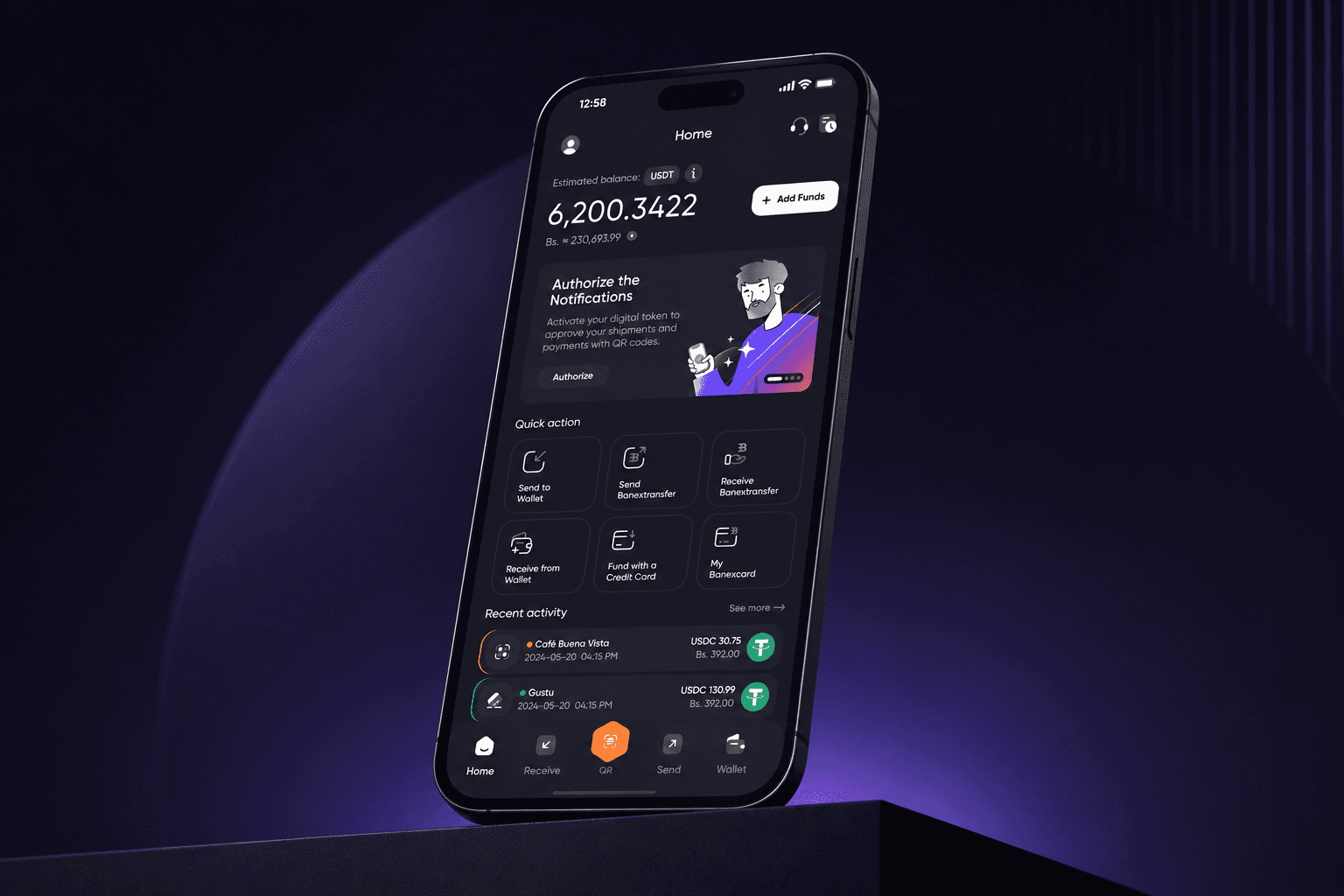
Rather than acting as a central hub, the original experience opened directly into the wallet, making navigation fragmented and limiting the discoverability of new features as the product continued to grow.
As Banexcoin expanded beyond basic wallet functionality, users needed a clear starting point capable of surfacing balances, market information and high-frequency actions without increasing cognitive load.
Instead of adding more shortcuts to the existing wallet, I introduced a dedicated Home experience organized around visual hierarchy.
The dashboard prioritized the information users checked most frequently while grouping secondary actions into predictable sections. Quick Actions became the primary interaction pattern, allowing users to reach deposits, transfers and trading in just a few taps.
A darker visual language was also introduced to reinforce trust, improve readability during extended sessions and establish a more refined product identity.
The new Home became the central entry point of the ecosystem, making the growing platform easier to navigate while helping users discover new functionality without sacrificing clarity or simplicity.
Bridging Traditional Finance & Crypto
Depositing fiat currency into a cryptocurrency platform often becomes the first point of friction for new users. Traditional banking processes introduce unfamiliar terminology, multiple verification steps and uncertainty about what happens after a transfer is completed.
Rather than presenting every requirement at once, I redesigned the experience into a guided three-step flow. Each stage focused on a single objective, allowing users to complete bank transfers with greater confidence while progressively revealing only the information needed at each moment.
Traditional Banking
Complex bank transfer process with multiple requirements.
Guided 3-Step Deposit
Break the experience into three clear, sequential steps to reduce cognitive load.
Automatic Verification
Users only provide the transaction number while the system validates the transfer in the background.
Crypto Balance Available
Funds become available in the user's wallet after successful verification.
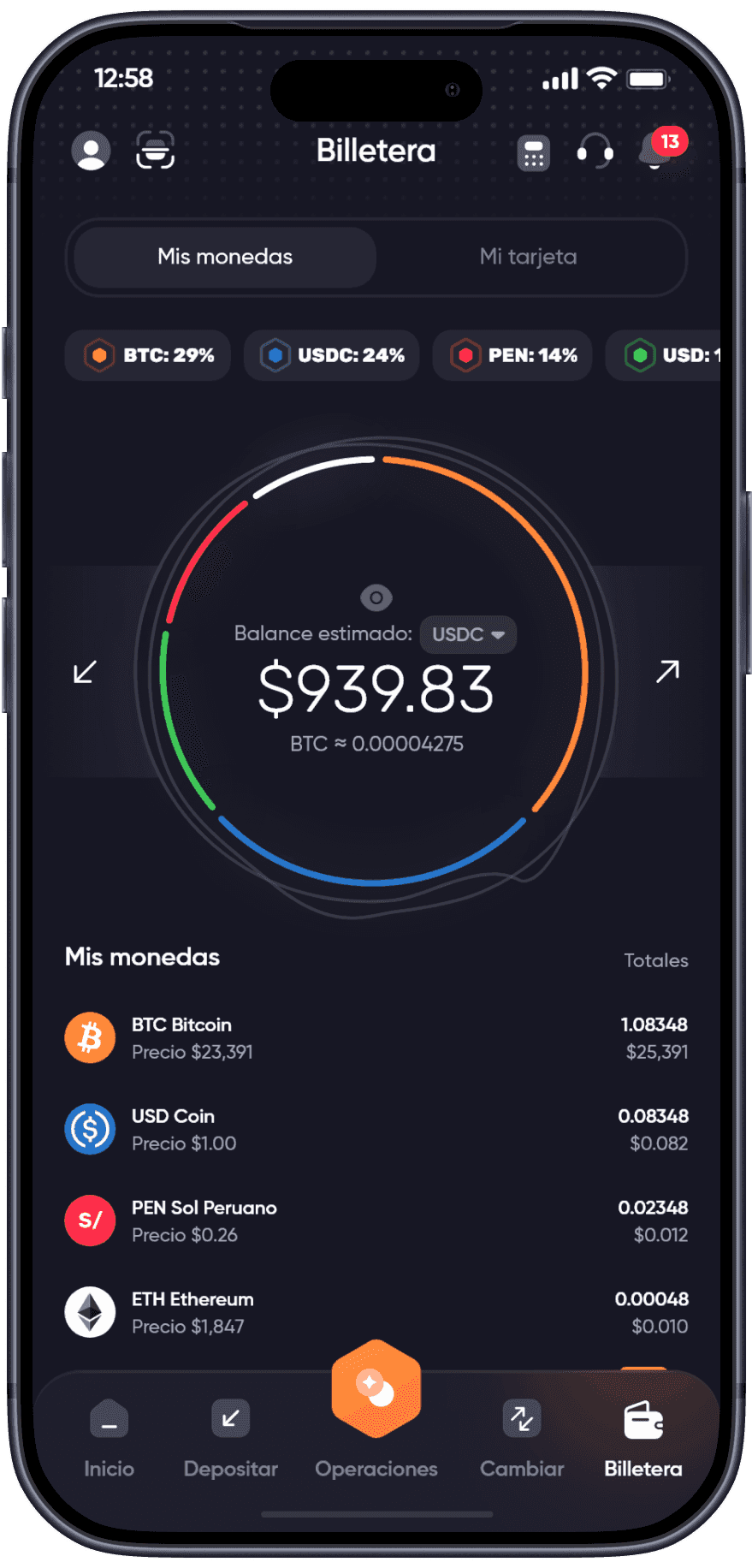
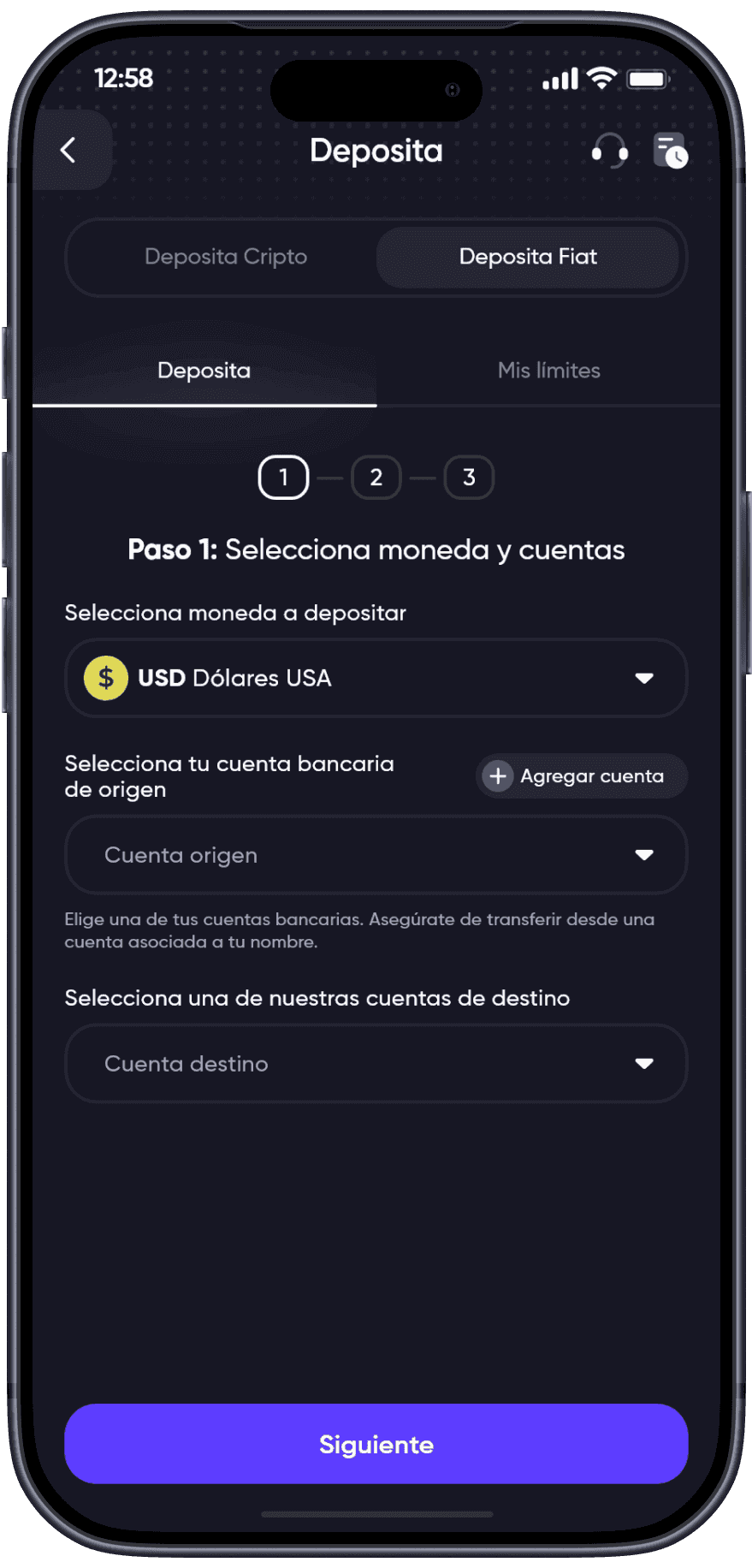
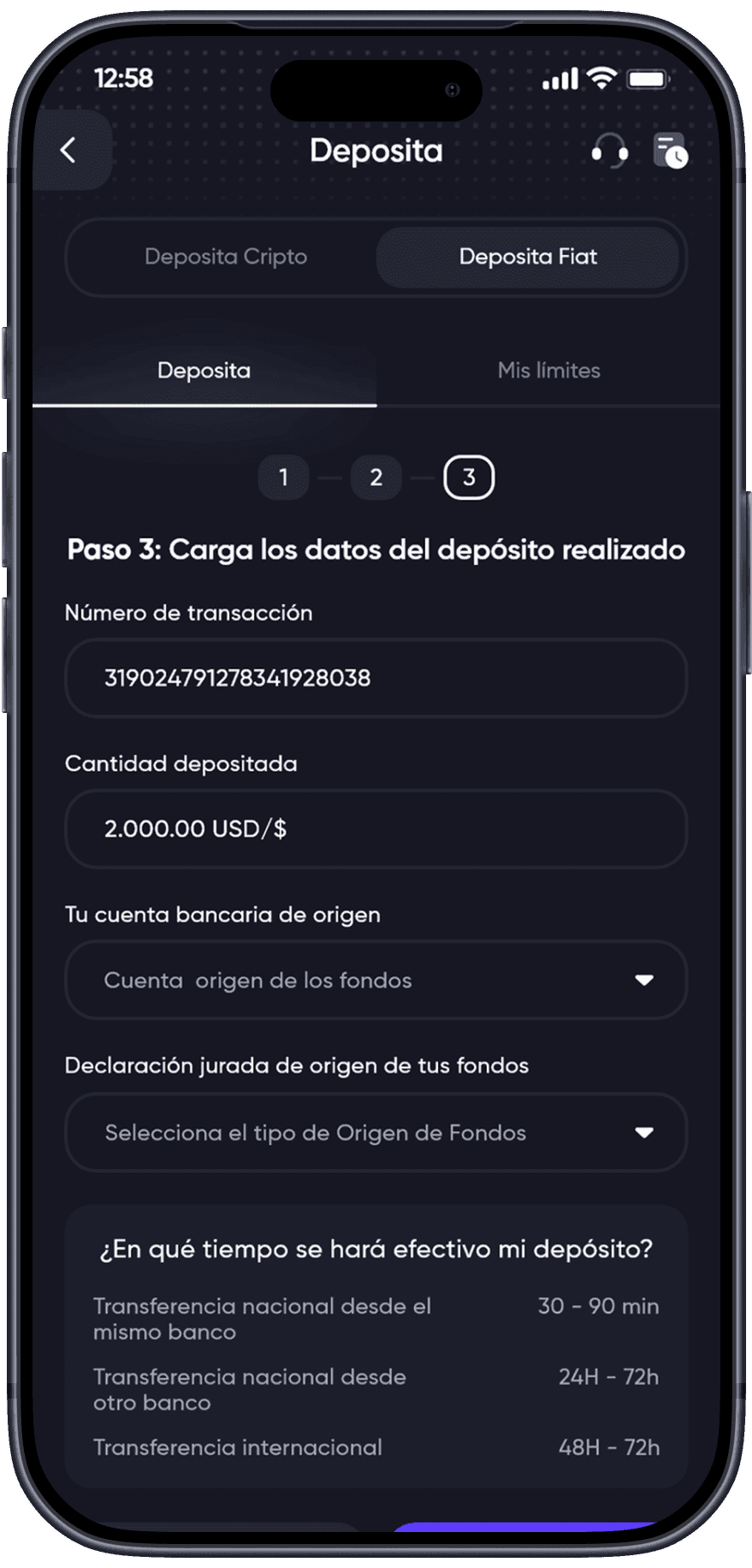
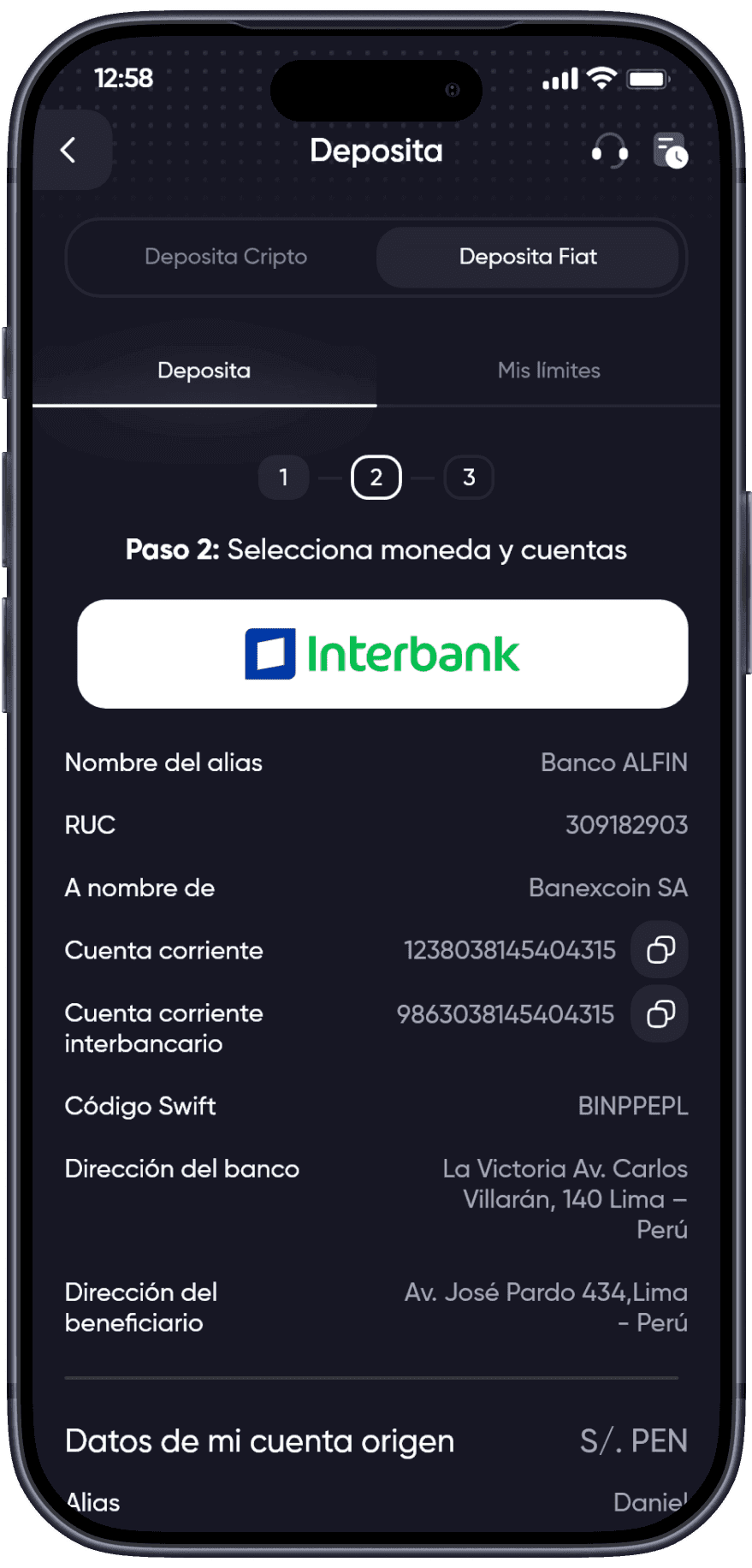
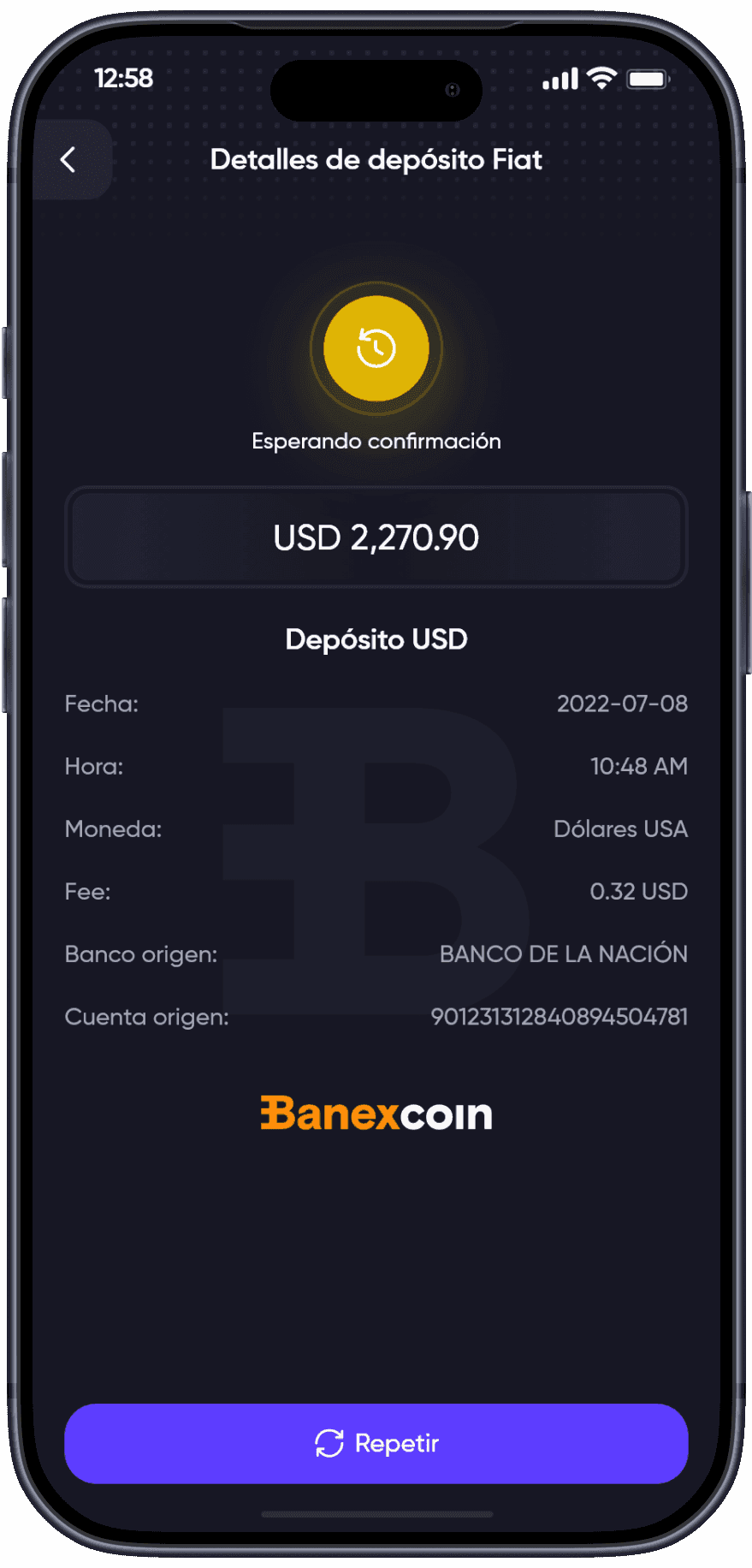
The redesigned deposit flow reduced cognitive load by breaking a complex banking process into predictable steps, helping users complete deposits with greater clarity, confidence and trust.
Designing Progressive Verification for Banexcard
Obtaining a financial card required users to complete identity verification, residency checks and personal information before approval. Presenting every requirement at once risked making the process feel overwhelming, especially for users unfamiliar with digital financial onboarding.
Rather than exposing one long verification form, I divided the experience into progressive stages. Each step introduced a single objective while clearly communicating what information was required and why, helping users move through the process with greater confidence.
The onboarding experience transformed a complex verification process into a guided journey, making Banexcard feel accessible while reinforcing trust throughout every stage.
Building a Consistent Cross-Platform Experience
As Banexcoin evolved, the experience expanded beyond a single mobile application. Every new feature needed to feel consistent across mobile and web while respecting the interaction patterns and technical constraints of each platform.
Web Platform
PurposeDesigned for users managing larger portfolios and active trading sessions, prioritizing information density and efficient workflows.
iOS
FocusNative mobile experience optimized for everyday financial management, quick actions and smooth interactions.
Android
AdaptationMaintained the same product experience while respecting Android interaction patterns and platform conventions.
One Design System. Multiple Experiences.
A shared foundation ensured visual consistency while allowing each platform to feel native to its users.
How the product held together
Progressive Simplicity
Complex financial processes were broken into smaller, guided steps to reduce cognitive load without removing functionality.
Trust Through Clarity
Clear visual hierarchy, predictable layouts and transparent feedback helped users feel confident when managing their money.
Consistent Across Platforms
Every experience followed the same interaction patterns across Web, iOS and Android while respecting platform conventions.
Designed to Scale
Reusable components and a growing design system allowed the product to evolve across new modules, markets and future releases.
Building a Scalable Design System
As Banexcoin expanded across new features, platforms and markets, maintaining visual and interaction consistency became increasingly difficult. A shared Design System was essential to keep the product scalable while improving collaboration with engineering.
Instead of designing every screen independently, I established reusable foundations through shared components, semantic color tokens and standardized interaction patterns that could evolve with the product.
Reusable Components
Built once, trusted everywhere the product shipped next.
Semantic Tokens
Design decisions encoded as values engineers could depend on.
Consistent Interaction Patterns
Familiar behavior reduced relearning across every surface.
Engineering Ready
Handoff became implementation, not translation.
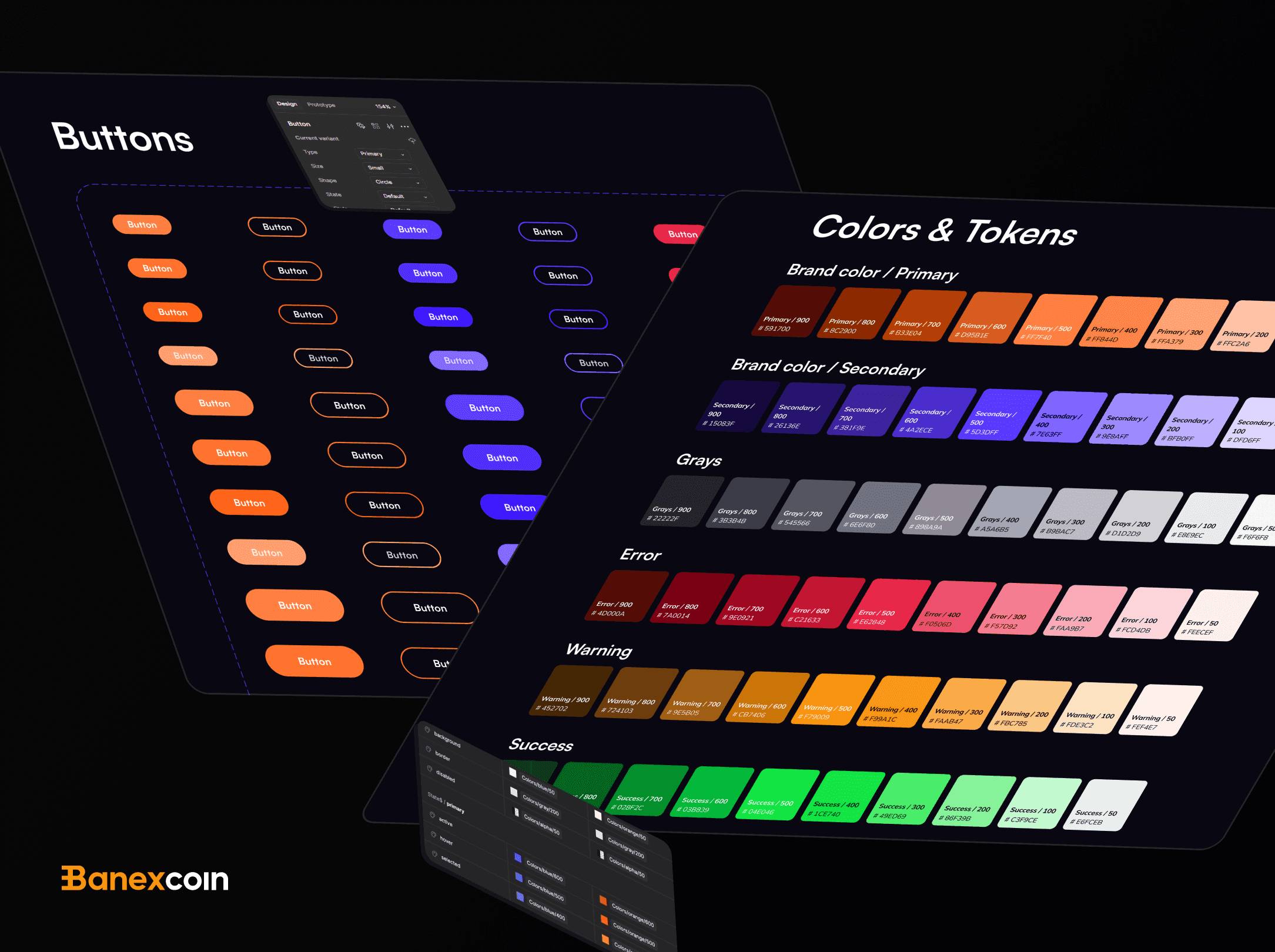
The Design System became the foundation for Banexcoin's continued growth, enabling faster design iterations, more consistent implementation across Web and Mobile, and smoother collaboration between design, QA and engineering teams as the product expanded.
Designing for Production
As Banexcoin evolved into a multi-platform financial product, delivering polished interfaces required more than high-fidelity mockups. Every design decision needed to account for Flutter constraints, engineering feasibility and production quality.
Rather than treating handoff as the final step, I stayed closely involved throughout implementation. I reviewed staging builds, documented visual inconsistencies, tested Flutter behavior locally when needed and iterated alongside developers until the experience matched the original design intent.
Design
Explore the problem and shape a direction worth building.
Prototype
Make the idea feel real before a line of code exists.
Developer Handoff
Translate intent into specs engineering can build from.
QA Review
Check the built experience against the intended one.
Implementation
Watch the design take shape in production code.
Iteration
Refine what the build revealed the design couldn't predict.
Release
Ship the work into the hands of real people.
Close collaboration with QA and engineering reduced implementation inconsistencies, accelerated design iterations and ensured the final product remained faithful to the intended user experience across every release.
What the work delivered
Banexcoin evolved from an early cryptocurrency exchange into a multi-platform ecosystem spanning mobile, web and localized experiences for Peru and Bolivia.
Established reusable design patterns, shared UI components and a Design System that supported continuous product growth across multiple releases.
Cross-functional Collaboration
Worked closely with QA and engineering throughout implementation, ensuring designs remained consistent from concept to production.
Business Growth
Contributed to a product that continued expanding with new modules, markets and business opportunities, reinforcing client confidence in the platform.
One design language across every surface shipped.
A shared library engineering could build from directly.
Sustained collaboration through three major releases.
A single experience adapted, not duplicated, per platform.
Banexcoin began before our transition to Figma, and building reusable foundations was significantly more difficult. Looking back, I would invest in a stronger Design System much earlier to improve scalability, consistency and collaboration.
Banexcoin was the project that transformed me from someone who designed interfaces into someone who understood how digital products are built, scaled and shipped.